Coffee 101
How to Taste Coffee at Home: A Q Grader’s Method
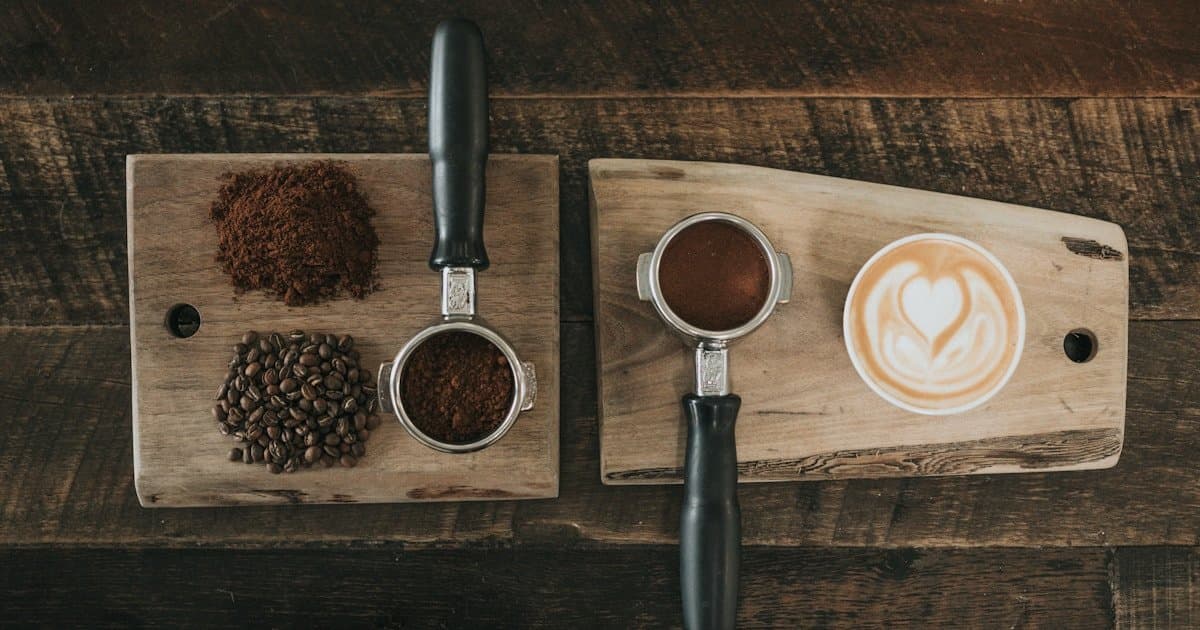
To taste coffee at home, brew two or three coffees the same way, side by side, and drink them black. Smell the dry grounds, smell the wet grounds, slurp from a spoon, and write down one word each for aroma, acidity, sweetness, body and finish. Then taste again as the cups cool. The comparison does the work.
That is a cupping, the method every roaster and green buyer uses to evaluate coffee, stripped of the scoring. I cup for a living: every lot Beanlytics buys goes through blind cupping sessions to the Specialty Coffee Association’s protocol before we commit to it, in Richmond, BC. This is the same method with kitchen equipment, and the reason it works is that you are never asked to describe one coffee in a vacuum. You are asked what is different between two cups in front of you, and that question has an answer.
What you need
- Two or three coffees that differ in an obvious way: a different origin, a different process, or a different roast. The more different they are, the easier the first session is.
- A burr grinder. Blade grinders produce uneven grounds, and unevenness tastes like a fault you did not cause.
- A kettle and a kitchen scale. A thermometer helps but is not required.
- One identical mug or bowl per coffee, about 200 mL, and two soup spoons.
- A timer, a glass of plain water for rinsing the spoon, and a pen.
- No milk, no sugar. Both flatten exactly the differences you are trying to find.
Coffee roasted in the last few weeks makes this much easier. Old coffee drifts toward flat and papery, and every cup on the table drifts the same way.
The method, step by step
- Weigh 12 g of each coffee and grind it medium-coarse, like coarse sand. Keep the grind setting identical across all the coffees.
- Put the grounds in their mugs and smell each one. This is the dry fragrance, and it is often the clearest signal of the session. Note a word or two before you pour anything.
- Heat water to 93 °C, or bring it to the boil and wait about 30 seconds. Pour 200 mL over each mug and start the timer. Pour the same way into each.
- At four minutes, push a spoon gently through the crust of grounds on top of each cup, three times, with your nose over the cup. The wet aroma released at the break is the strongest smell the coffee will ever give you.
- Skim the foam and floating grounds off the surface with two spoons, then rinse the spoons.
- Wait until the coffee has cooled to around 70 °C, roughly eight to ten minutes after the pour. Fill a spoon and slurp it, loudly. Pulling air across the coffee spreads it over your whole palate and lifts the aromatics into your nose, which is where most of what you call taste actually happens.
- Move between the cups, not through them. Taste cup one, then cup two, then back to cup one. Write one word for each of the five attributes below, per cup.
- Taste again at around 50 °C and once more near room temperature. Add to the notes each time. Acidity and sweetness change more than you expect as the cup cools.
The dose is a little stronger than the SCA’s cupping standard of 8.25 g per 150 mL of water, and the temperature and the four-minute break are the same. A professional session also pours five cups of every coffee and tastes them blind, so that a single odd cup or a favourite label cannot sway the result. At home, two cups and an honest friend get you most of the way.
The five things to name
Every tasting form in the industry rests on the same handful of attributes. Name these five and you have described the coffee.
Aroma is what you smell, dry and then wet. Floral, fruit, sugar, nut, spice, earth: pick the family before you reach for a specific fruit. Our Colombia Gesha from Finca Miramar is the teaching cup for this: its notes are orange zest, apricot and a jasmine finish, and most of that reaches you through the nose rather than the tongue.
Acidity is brightness, the quality that makes a coffee feel lively rather than flat. It is not sourness, which is acidity without sweetness behind it. High-grown coffees show it plainly: the Ethiopia Limmu honey from 1,930 m tastes of navel orange and lemon because that acidity is intact.
Sweetness is the hardest to notice and the most important, because it is what a well-grown, well-roasted coffee has that a poor one does not. Look for it after the acidity fades, as caramel, honey or brown sugar. The Guatemala Antigua Pacas shows it as brown sugar and plum.
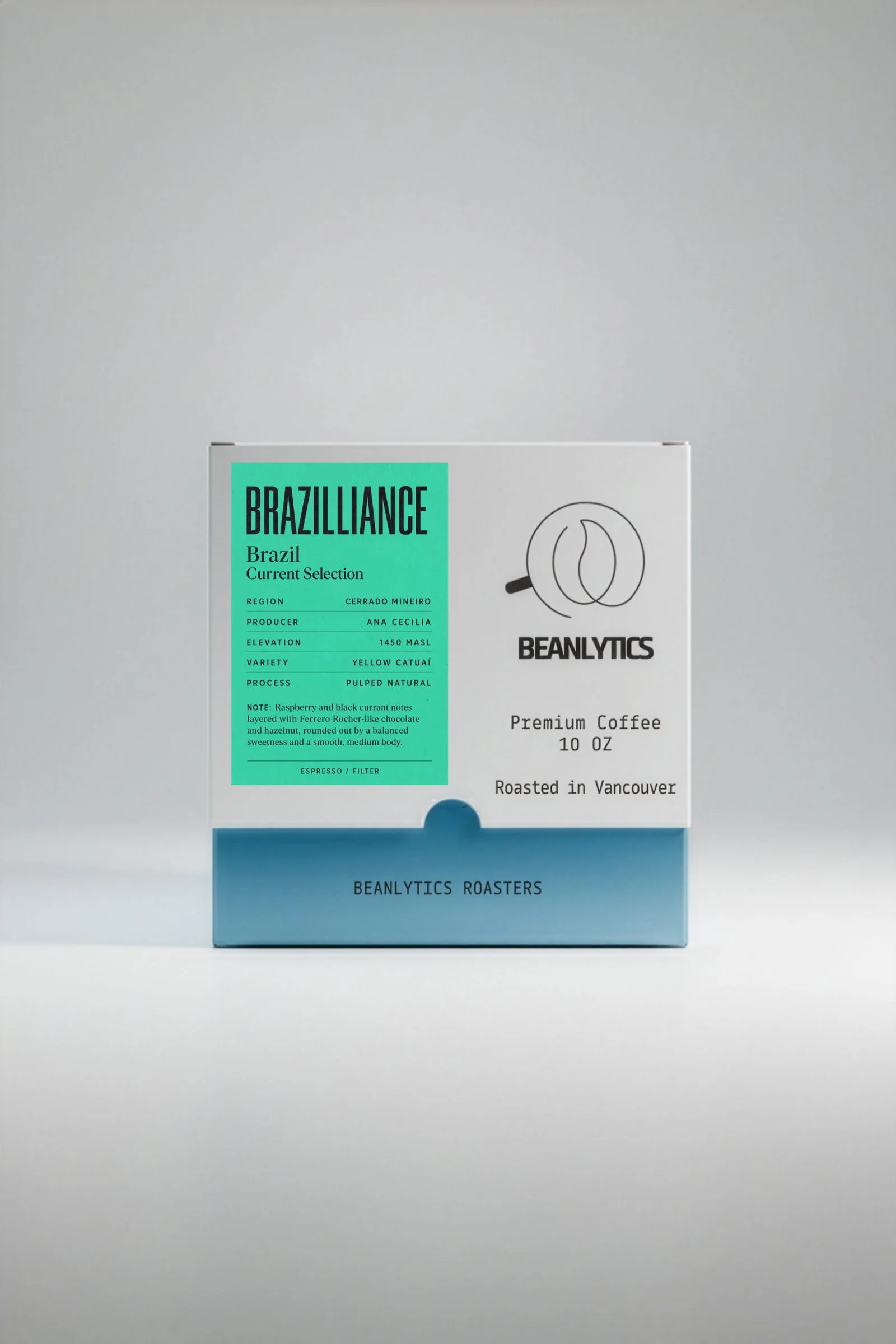
Body is weight and texture on the tongue: thin like tea, or heavy like whole milk, or somewhere between. Our Sumatra Mandheling, wet-hulled by the Simalungun and Karo cooperative, is the heaviest coffee on our shelf, and the Brazil Yellow Catuai sits in the middle with a smooth, rounded weight.
Finish is what stays after you swallow, and for how long. A clean finish disappears without a trace; a long one keeps giving you cocoa or fruit for half a minute. Notice whether it is pleasant, and whether it changes.
Professionals also score balance, uniformity across the cups, and clean cup, which is the absence of anything that should not be there. At home you can fold those into a single question: was the cup clean, and did everything in it fit together?
Pairs to taste against each other
A first session goes best when the two cups differ in one big way. These are pairs from our own shelf, with the thing that changes and what to look for. Every note here is what our own cupping table found in that lot, so you can check your palate against ours.
| Cup one | Cup two | What changes | What to notice |
|---|---|---|---|
| Ethiopia Limmu honey, 1,930 m | Brazil Yellow Catuai, 1,450 m | Origin and altitude | Citrus and honey against chocolate and hazelnut. The Limmu is brighter and lighter; the Brazil is rounder, with raspberry underneath the chocolate. |
| Colombia Gesha, washed | Colombia El Diviso Sidra, anaerobic washed | Variety and processing, same country | Jasmine and apricot against honeysuckle, lime and cherry blossom. The anaerobic lot is the stranger of the two, with a butter-cookie sweetness the Gesha does not have. |
| Sumatra Mandheling, wet-hulled | Guatemala Antigua Pacas, washed | Processing and body | Herbal, earthy and smoky with orange at the edges against plum, white chocolate and lime. The clearest body contrast on our shelf. |
| Ecuador Sidra, 2,100 m | Colombia Huila decaf, sugarcane EA | Caffeine | Cooked lemon and caramel against crisp fruit and cocoa. Decaffeination changes less than people expect when the green coffee was good to start with. |
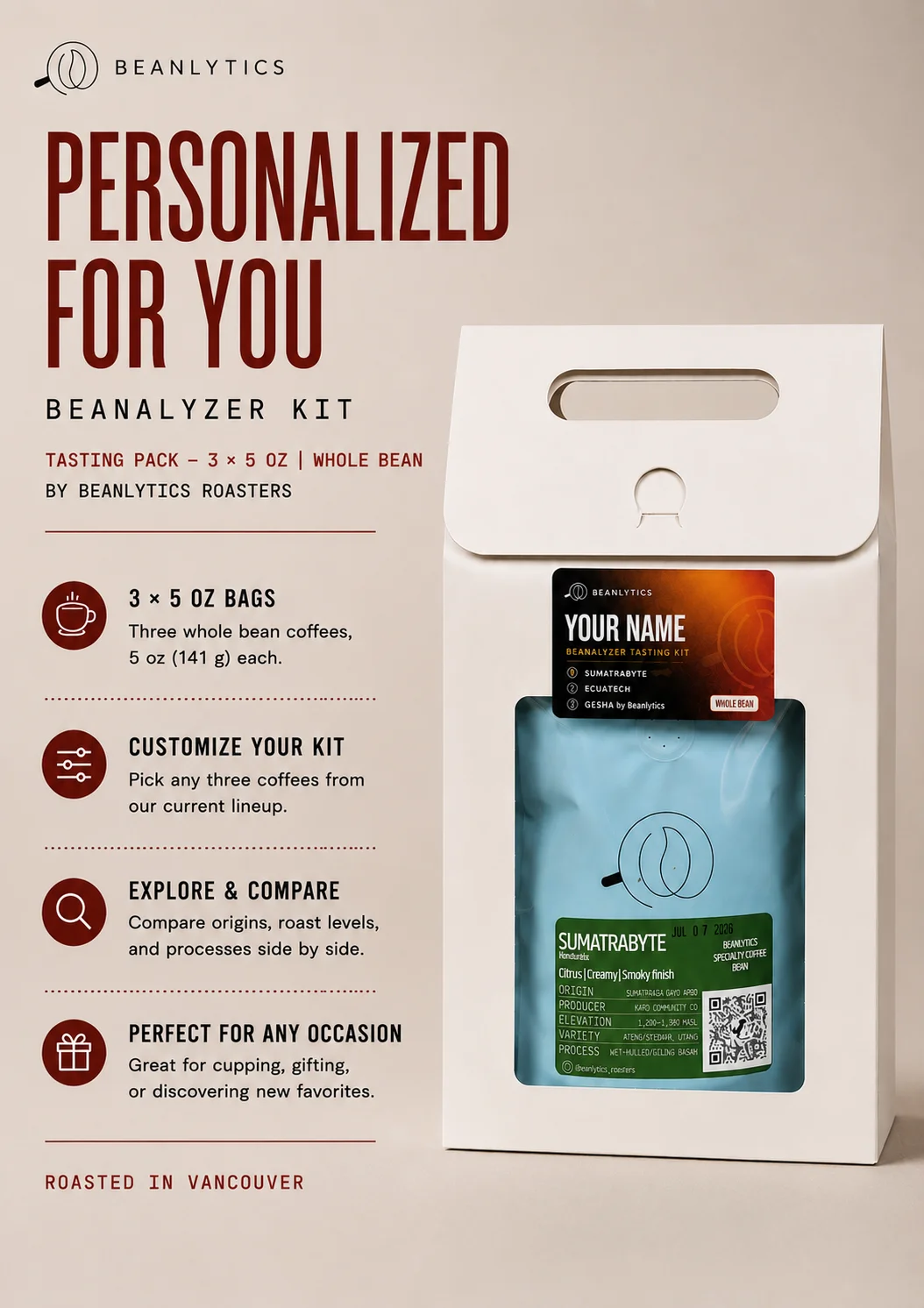
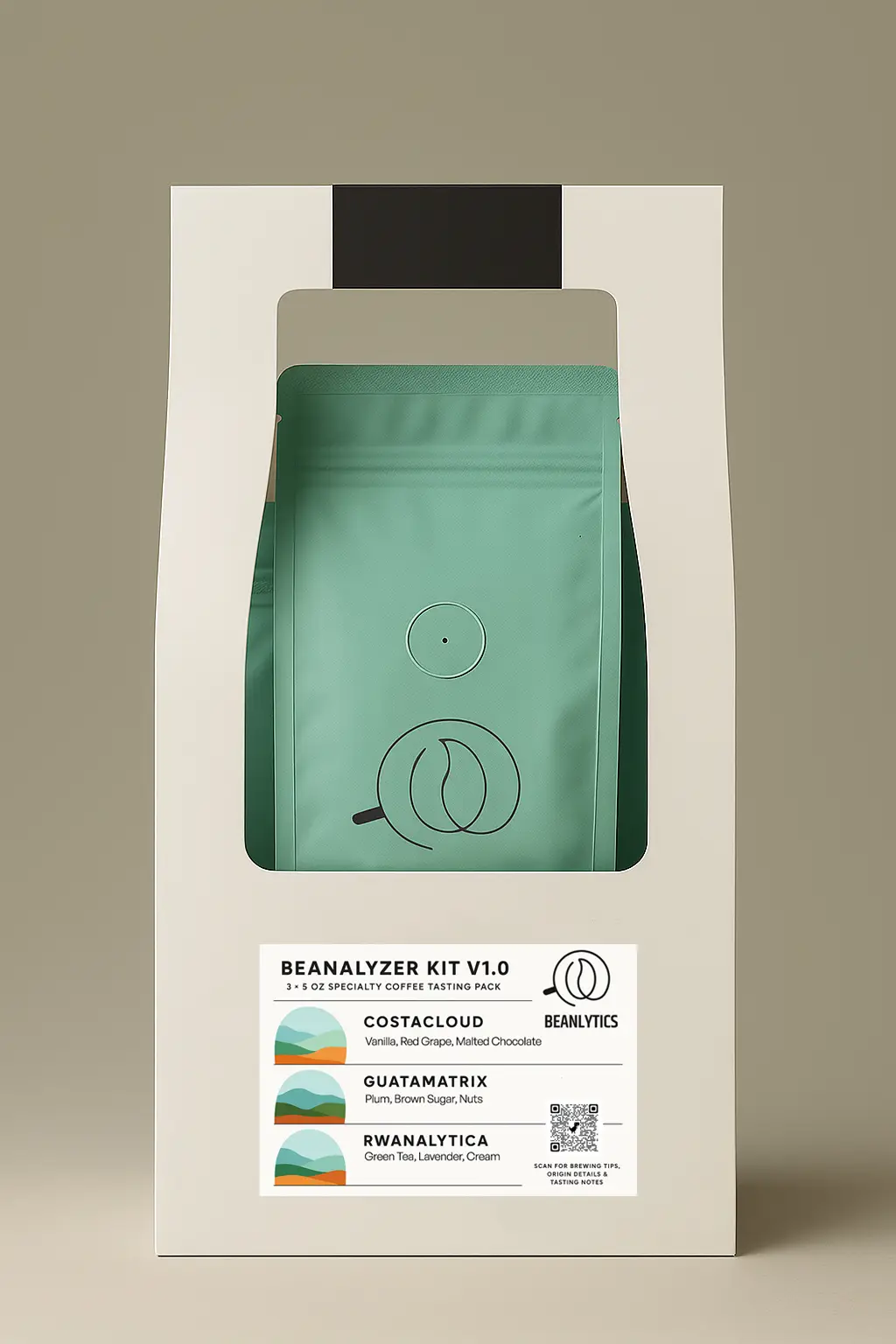
If you want three coffees without buying three full bags, the Beanalyzer tasting kit is any three coffees from the current lineup in 5 oz bags. It exists because of this exact exercise: three coffees tasted against each other tell you more than three tasted a month apart.
Why the temperature ladder matters
Coffee at 70 °C is mostly aroma and body. By 50 °C the acidity and sweetness come forward and faults become obvious. Near room temperature a good coffee is still sweet and a poor one has turned thin or harsh. This is why a cupping table tastes each cup three times over twenty minutes, and why a coffee that seemed dull hot can be the best on the table once it cools. Give the session the full twenty minutes.
How tasting notes get onto a bag
The three or four descriptors on a bag are not flavourings and they are not a promise. They are what a trained taster found on the cupping table, written in the shared vocabulary of the SCA’s flavour wheel. Under the SCA’s current system, the Coffee Value Assessment, that descriptive step is kept separate from the affective one: first what is in the cup, then how much the taster liked it. Our roasting and cupping methodology lists the nine attributes we record for every lot before it is bought.
So read the notes as a map, not a checklist. If a bag says navel orange and you find lemon, you have found the same citrus acidity and described it in your own word, which is the entire skill. Fruity versus chocolatey coffee explains where each family of notes comes from, and what specialty coffee is covers how a cupping score turns into a grade.
When it does not work
Everything tastes the same. The two coffees are too similar, or the cups are too hot. Pick a pair from the table above and wait for 50 °C. Tasting black is not optional here.
Everything tastes sour. Under-extraction: the grind is too coarse for the time, or the water was not hot enough. Grind finer or pour hotter. Sour with sweetness behind it is acidity, and that is the coffee, not a fault.
Everything tastes bitter or harsh. Over-extraction, or coffee that was roasted too dark to show origin. Grind coarser, and check the roast date and roast level on the bag. How roast profiles shape flavour explains what a darker roast burns off.
The notes on the bag are not there. They may be, under a different name. Find the family first (fruit, sugar, nut, floral), then argue about the species. If nothing fruity appears in a coffee sold as fruity, check the water: very hard or very soft water can flatten a cup, and water chemistry in coffee brewing covers the fix.
It tastes different from the cup you brewed yesterday. It will. Ratio, grind and water temperature move the cup as much as origin does. The coffee-to-water ratio is the variable to fix first.
Questions people ask
What is the proper way to taste coffee?
Black, from a spoon, with a loud slurp, at more than one temperature, and next to a second coffee. Smell before you taste. Name aroma, acidity, sweetness, body and finish, one word each. That is the whole professional method; the scoring sheet is only bookkeeping on top of it.
How can I develop a taste for coffee?
By tasting in pairs, often, and writing the words down. Palates are trained by contrast, not by volume. A cupping table with eight coffees teaches more in twenty minutes than a month of single cups, and two mugs on a kitchen counter teach the same way. Repeat the same pair a week later and see whether your words hold.
What is the coffee-to-water ratio for cupping?
The SCA cupping standard is 8.25 g of coffee to 150 mL of water at 93 °C, about 1:18. The home version above uses 12 g to 200 mL, about 1:17, which is easier to weigh and slightly stronger. Keep whichever ratio you choose identical across every cup on the table.
Do I need to score the coffees?
No. Scores exist so that graders in different countries can agree on a number, and that takes calibration and a certification. At home the useful output is a list of differences and a preference. If you want the reference point, the specialty threshold on the old SCA form was 80 out of 100.
Can I do this with friends?
Yes, and it is better with three or four people, because someone will find the note you missed. Pour two cups of each coffee so everyone can go back to a fresh spoonful, keep the coffees unlabelled until the end, and have each person write before anyone speaks. The first person to say “chocolate” out loud decides what everyone else tastes.