Coffee 101
What Is Anaerobic Coffee? Anaerobic Washed vs Natural
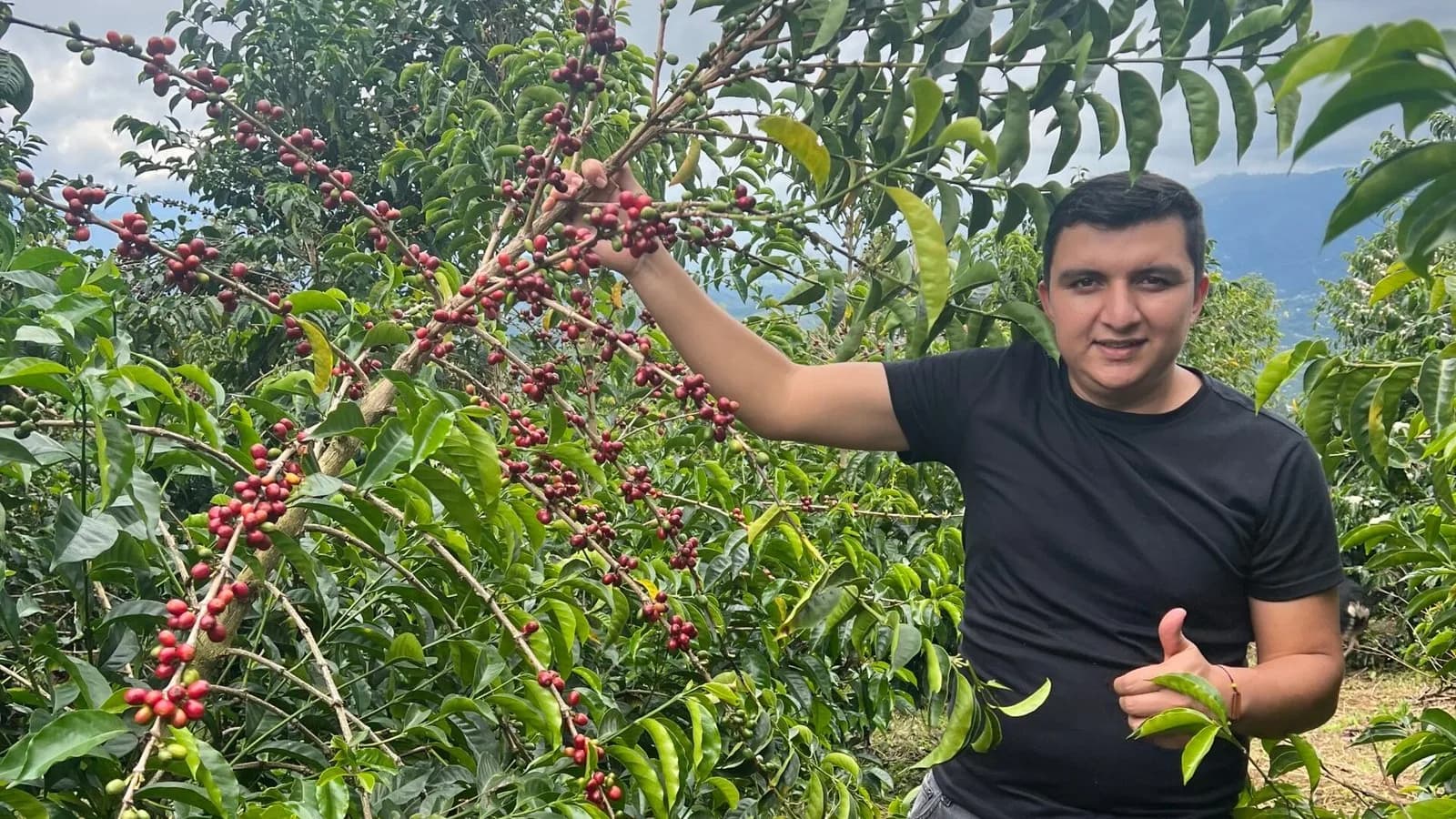
Anaerobic coffee is coffee that spent part of its processing fermenting in a sealed tank or bag with little or no oxygen inside. That sealed step is added to a familiar method, so the coffee still finishes as a washed, honey or natural coffee, and the finish shapes the cup as much as the tank does.
I’m the head roaster at Beanlytics in Richmond, BC. My example throughout is the one anaerobic lot we roast, the Colombia El Diviso Sidra, sold as ColomBias Anaerobic: a Sidra produced by Nestor Lasso at El Diviso in Pitalito, Huila, and processed anaerobic washed. For the methods it builds on, start with how coffee processing shapes flavour.
What anaerobic means in coffee processing
Every coffee ferments a little on its way from cherry to green bean. Cafe Imports, a green coffee importer, explains that nearly all coffee goes through some fermentation of its fruit, as yeast and bacteria feed on the sugars and acids in the mucilage, the sticky layer around the seed.
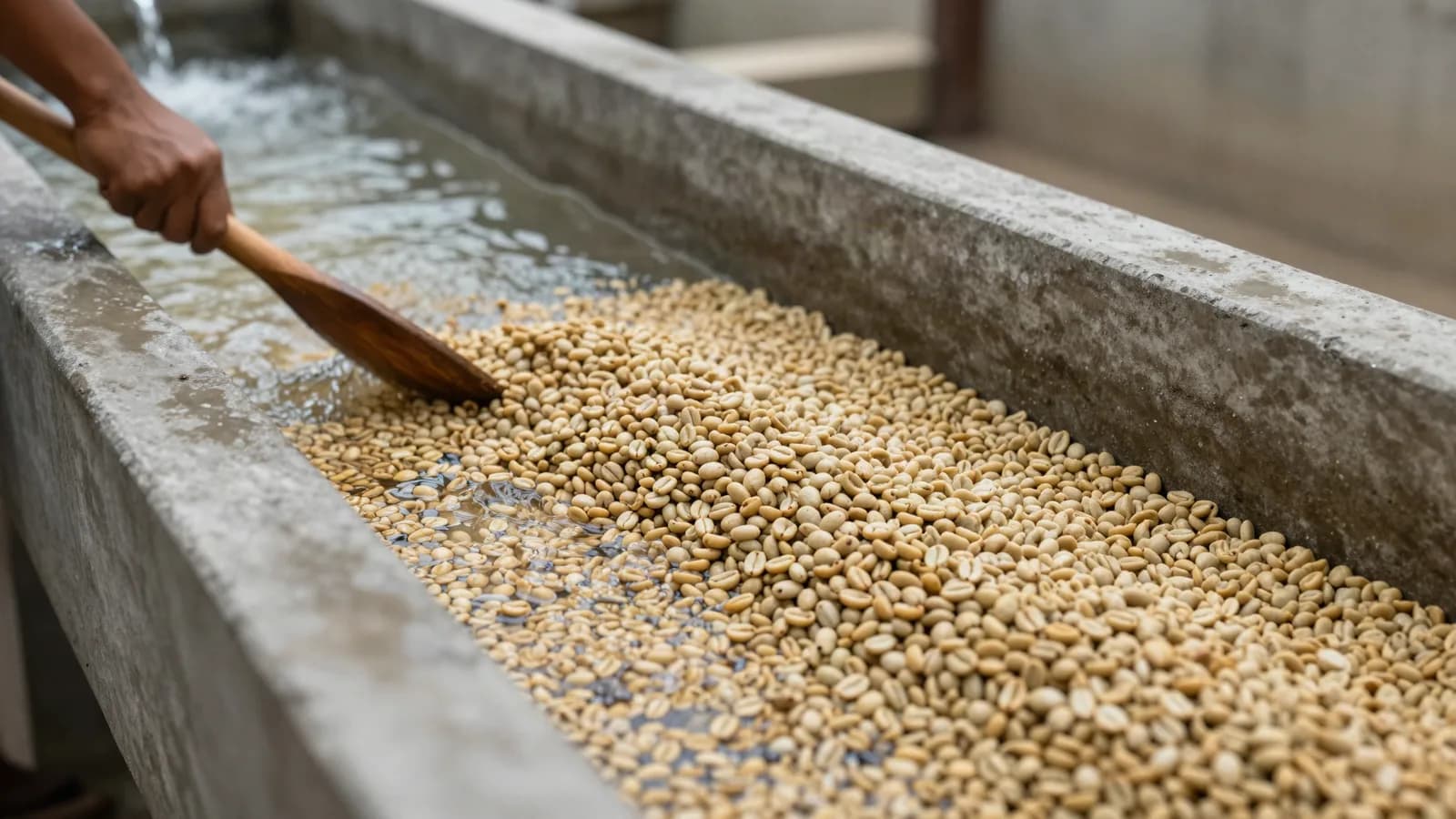
An anaerobic coffee moves that fermentation into a closed vessel. Cafe Imports describes how it works: fresh coffee goes into a container that is then sealed, the carbon dioxide given off by the fermenting fruit builds up inside, and it pushes out whatever oxygen was there at the start. With the oxygen gone, different microbes thrive: Coffee Review explains that yeasts are held back and bacteria become more active, and those bacteria tend to produce tangy lactic notes, the kind found in yogurt.
Coffee Review, which tested 43 coffees for a report on anaerobic processing, says they stayed sealed for anywhere from around one day to six days before drying, and that the longer the coffee stays in, the stronger the effect.
The word on the bag names one step
Cafe Imports makes a useful point: calling a coffee anaerobic describes only one step it went through, and it would be more accurate to say something like “an anaerobic step for X duration of time.” The word doesn’t say how long the step lasted or whether the coffee was fermented again before or after it.
Anaerobic natural vs anaerobic washed, and where carbonic maceration fits
The second word on the label is the method the sealed step was added to. Nordic Brew Lab explains that names like anaerobic natural and anaerobic washed describe what remains of the cherry during fermentation, and gives a simple rule: more cherry means more sugar, and more sugar means a more intense fermentation.
| Anaerobic natural | Anaerobic washed | Carbonic maceration | |
|---|---|---|---|
| In the sealed vessel | Whole cherries | Whole cherries, or pulped seeds with some mucilage | Whole cherries |
| Where the oxygen goes | Pushed out by carbon dioxide from the fermenting fruit | Pushed out by carbon dioxide from the fermenting fruit | Forced out by carbon dioxide pumped into the tank |
| After the sealed step | Left in the whole fruit to dry | Fruit comes off and the seed is washed before drying | Can finish natural or washed |
| How it tends to taste | More intense, with lush fruit and a fuller body | A bit leaner in body, brighter in structure | Clearer, brighter fruit, less booziness |
Anaerobic natural
Coffee Review defines it simply: if the seeds stay inside the fruit through fermenting and drying, the coffee is an anaerobic natural. If the drying is deliberately stretched to 60 days or more, it may be labelled an anaerobic slow-dry (ASD) natural. Nordic Brew Lab notes that an anaerobic natural is often more aromatic and intense than an anaerobic washed coffee.
Anaerobic washed
An anaerobic washed coffee goes through its sealed step and then finishes like any washed coffee, with the fruit removed and the seed washed clean before it dries. Producers get there by two routes. In the coffees Coffee Review tested, the skin and fruit flesh came off right after an anaerobic fermentation in whole cherry. Royal Coffee, another green coffee importer, describes a Costa Rican lot that went the other way: pulped first, fermented in a sealed tank with added mucilage and a little water, then fully washed.
Coffee Review found its anaerobic washed samples a bit leaner in body but brighter in structure than the anaerobic naturals, with pungent, tangy lactic notes on top of a washed coffee’s brighter acidity.
Anaerobic honey
Coffee Review also tested anaerobic honey coffees, which had only their skins removed after fermentation and dried with the fruit flesh or mucilage still on. They finish the way a regular honey process coffee does, with a sealed fermentation first.
Carbonic maceration
Carbonic maceration is a kind of anaerobic fermentation with one change. Coffee Review says that if extra carbon dioxide is injected into the tanks where the fruit ferments, the method may be called carbonic maceration. Nordic Brew Lab adds that it uses whole cherries only, so the fermentation happens mainly inside the intact fruit, and that it often lands at the clean, bright end of the anaerobic range.
The name comes from wine. Scott McMartin, Director of Coffee at Mercon Specialty, told Perfect Daily Grind that anaerobic and carbonic macerated coffees are made in a similar way to French Beaujolais wines. Five Senses Coffee, reporting on Sasa Sestic’s win at the 2015 World Barista Championship, says the winning coffee was processed by a method called washed carbonic maceration.
What anaerobic coffee tastes like
The common thread is intensity. Coffee Review found that virtually all of the anaerobic coffees it tested had greater-than-usual intensity, a fuller mouthfeel and often more sweetness. Nordic Brew Lab describes well-made ones as showing high sweetness, layered tropical fruit and a creamy, smooth acidity, and warns that more intense fermentations can turn winey, boozy or funky.
More intensity isn’t automatically better. Barry Levine of Willoughby’s Coffee & Tea, quoted by Coffee Review, observed that too much intensity can mask a coffee’s own qualities the way a dark roast does. For Nordic Brew Lab, the best anaerobic coffees still taste like where they came from, with an added layer of sweetness, texture and aroma.
Why producers use it, and what can go wrong
Cafe Imports notes that a fermentation environment favouring certain microbes over others can produce unique flavour profiles, and that these processes help farms and their coffees stand out. The cost, by Cafe Imports’ account, is close monitoring of pH, Brix (dissolved solids, mostly sugar), temperature, smell and bubbling. Martín Ureña of La Chumeca, a farm in Costa Rica, told Cafe Imports that a sharp temperature rise inside the barrel means an aerobic fermentation has started, and if it isn’t controlled in time, vinegar and other unpleasant acidic flavours can develop.
All of this takes equipment and tank space, which Cafe Imports gives as the reason anaerobic coffees are usually sold as microlots. It also notes that the term leaves so many variables open that nobody can yet say what anaerobic fermentation does to the cup the way they can for washed, honey and natural coffees. The label is only a starting point, which is why every lot we sell is cupped to Q Grader-certified standards before it goes on sale.
Our anaerobic washed Sidra from El Diviso
El Diviso is a farm in Pitalito, in Colombia’s Huila department, and our lot was produced there by Nestor Lasso at 1,850 metres above sea level. The variety is Sidra, which our Sidra coffee guide covers in depth, and the tasting notes are honeysuckle, butter cookie, lime, cherry blossom and caramelized sweetness. Our Colombian coffee guide covers the region.
The lot is listed as anaerobic washed and nothing more, so I won’t guess at how long the sealed step ran or whether it came before or after pulping. The name does confirm that the fruit was removed before the coffee dried.
Next to our washed Sidra
Our other Sidra, the Ecuador Sidra from Finca Terrazas del Pisque in Pichincha, is listed simply as washed, with notes of cooked lemon, caramel and cocoa. Going by the notes, the anaerobic lot leans floral where the washed one leans toward citrus and cocoa. It isn’t a clean experiment: the two grow in different countries, on different farms, 250 metres apart in altitude, so the process is only one of the differences.
Brewing it
I roast the El Diviso lot for filter. Nordic Brew Lab’s advice for anaerobic coffees is a good place to start: grind slightly finer, though these coffees still tend to run faster than washed ones, and use slightly cooler water, around 88 to 92°C, to keep the cup clear. Elika Liftee of Onyx Coffee Lab told Perfect Daily Grind that experimental coffees, anaerobic ones included, get brewed at 88 to 93°C there because they extract faster. Start around 1:16 coffee to water and adjust from there with our coffee-to-water ratio guide.
Questions people ask
What is the difference between anaerobic and aerobic coffee?
Oxygen. An aerobic fermentation happens open to the air, in tanks or on drying beds, and Coffee Review links it to the sweet, fruit-forward notes of oxygen-loving yeasts. An anaerobic fermentation is sealed away from the air, which favours bacteria and tangier, lactic notes. Cafe Imports adds that the sealed step runs slower: at La Chumeca, anaerobic coffees spend about 96 hours in the tank.
What is a natural anaerobic coffee?
It is a coffee fermented as whole cherries in a sealed vessel and then left in the fruit to dry, the way a regular natural is. Coffee Review found the anaerobic naturals it tested combined lush, fruit-forward notes with a lactic tang.
What is the difference between anaerobic coffee and natural coffee?
A natural coffee is left to dry in the whole cherry, with no sealed step. An anaerobic coffee has a sealed, low-oxygen fermentation and can then finish natural, honey or washed, so it isn’t always a natural. Ours, for one, is washed.
Is anaerobic coffee the same as fermented coffee?
Every anaerobic coffee is fermented, but fermentation alone doesn’t make a coffee anaerobic. Cafe Imports points out that nearly all coffee ferments to some degree, and that in coffee the word anaerobic describes the sealed environment the fermentation happens in. Some producers also add fruit, yeast or spices to the tank, and the word anaerobic alone won’t tell you whether anything went in.
Is anaerobic coffee good for espresso?
It can be. Nordic Brew Lab suggests a ratio between 2:1 and 2.5:1 for anaerobic espresso, and notes that very fermented coffees extract smoothly, so a slightly faster shot often reaches balance. The El Diviso lot is roasted for filter, though, so that is how we recommend brewing it.
Both lots, the anaerobic washed El Diviso and the washed Ecuador, are on our Sidra coffees page, roasted to order in small batches in Richmond, BC and shipped across Canada.