What leaving the mucilage on does
Pulping removes the skin but leaves the mucilage — the sticky sugar layer bonded to the seed — in place while the coffee dries. Drying takes anywhere from a few days to a few weeks, depending on how much mucilage stays on and the weather. With the skin and fruit gone it never gets the deep fermentation of a natural, but the seed is in contact with that sugar layer the whole time. The cup lands between the two: rounder and sweeter than a washed lot from the same farm, with more body, but keeping enough acidity and definition that the variety still reads clearly.
Two lots, two names for the same method
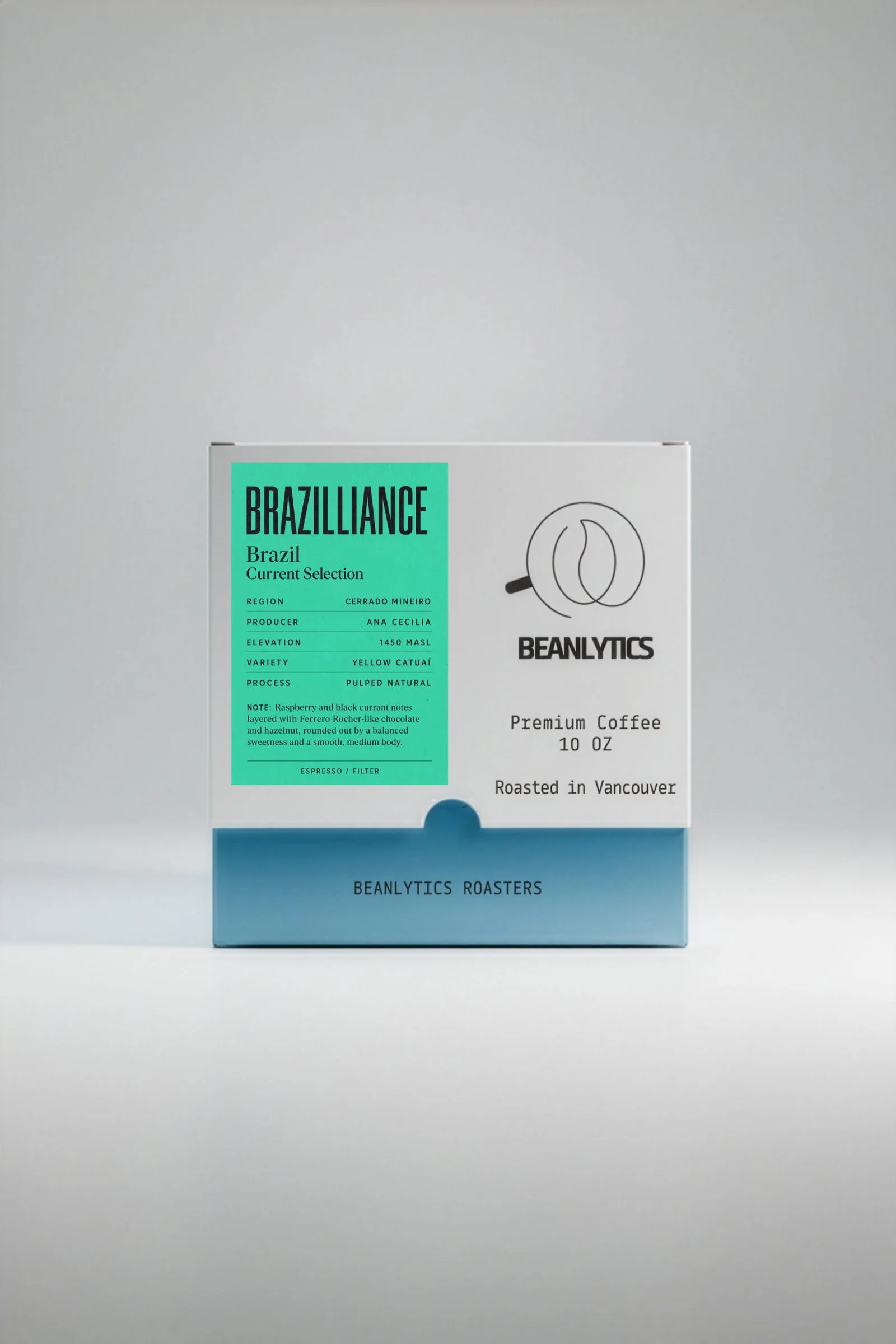
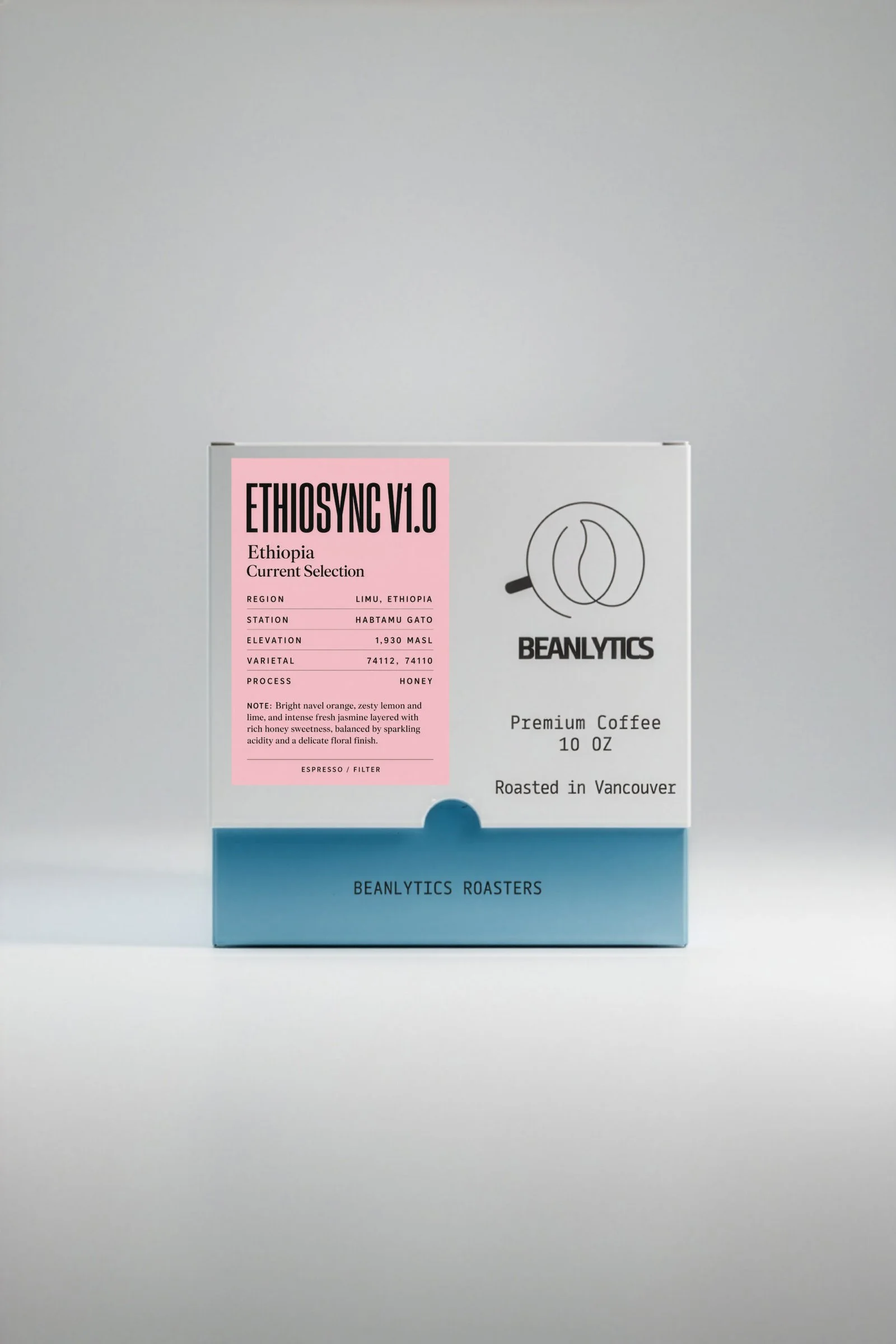
The Habtamu Gato site in Limmu, Ethiopia sits at 1,930 masl and grows the 74112 and 74110 selections — Jimma Agricultural Research Centre releases, bred for coffee berry disease resistance and now widespread across the southwest. It is sold as honey processed. Fazenda São Luiz in Cerrado Mineiro, Brazil, at 1,450 masl, Yellow Catuai, is sold as pulped natural. They are the same decision, named by different traditions — Brazil settled on "pulped natural" decades before Central America popularised "honey", and both mean skin off, mucilage on. Nearly 500 metres of altitude separates them, which is most of why the Ethiopian reads brighter.
Black, red and yellow
Where the honey vocabulary is used properly, the colour grades how much mucilage stayed on and how slowly it dried. Yellow is the lightest touch and the closest to a washed coffee; red is the middle; black leaves the most on and dries slowest, pushing furthest toward a natural. Producers do not always publish the grade, and we do not assign one that a lot did not come with — where our copy says honey without a colour, that is because the lot did.
Brewing a honey-process coffee
These are the most flexible lots on the shelf, which is the practical case for the process. A honey coffee holds up as a pour-over, where the retained acidity keeps it lively, and as espresso, where the extra body and sugar give it something to stand on. If you are buying one bag to brew two ways, this is the process to buy.