Coffee 101
Fruity vs Chocolatey Coffee: What Makes the Difference, and Which to Buy
Fruity coffee tastes of berries, citrus or stone fruit, and it arrives that way in the green coffee, from where it grew and how it was processed. Chocolatey coffee tastes of cocoa, caramel and nuts, and most of that is made in the roaster. That is the whole difference, and it decides which one suits the way you brew.
We roast both families in Richmond, BC, and I cup every lot before we buy it. Every example below is a coffee on our shelf, with its farm, altitude and process, so you can check the claim against a real bag.
The difference at a glance
| Fruity and floral | Chocolate and nutty | |
|---|---|---|
| Tastes of | Citrus, berry, stone fruit, jasmine, honey | Cocoa, caramel, brown sugar, hazelnut, almond |
| Where it comes from | The green coffee: origin, variety and processing | Mostly the roast, helped by lower-grown, fuller-bodied lots |
| Origins on our shelf | Ethiopia, Ecuador, Colombia, Guatemala, El Salvador | Brazil, Sumatra |
| Altitude of our lots | 1,450 to 2,100 metres | 1,200 to 1,450 metres |
| What processing does | Natural, honey and anaerobic add fruit; washed keeps it clean | Matters less here than roast development |
| Acidity and body | Bright, lighter body | Low acidity, full and syrupy |
| Best brew | Filter, or espresso drunk black | Espresso, especially with milk; French press |
| Start with | Ethiopia Limmu honey | Brazil Yellow Catuai |
What makes a coffee taste fruity
A coffee bean is the seed of a fruit, the coffee cherry, and some of that fruit stays with the seed. Two things decide how much.
The first is where the coffee grew and what variety it is. Coffee grown high and cool ripens slowly and keeps more of the acids and aromatic compounds that read as citrus, berry and flowers in the cup. Variety matters as much as altitude: Gesha, Sidra and Pacamara are grown in small quantities partly because they carry fruit and florals that ordinary varieties do not. Our Ethiopia Limmu grows at 1,930 metres at the Habtamu Gato site and tastes of navel orange, lemon and honey. The Ecuador Sidra from Finca Terrazas del Pisque, at 2,100 metres, tastes of cooked lemon and caramel. The El Salvador Pacamara grows lower, at 1,450 metres on Finca Luna, and still tastes of fruit, because the variety carries it.
The second is processing, what happens between the cherry and the dried green bean. In a washed coffee the fruit is removed before drying, so the fruitiness is clean and citrus-like. In a natural the bean dries inside the whole cherry, and the fermentation around it leaves a heavier, jammier fruit. Honey sits between the two. Anaerobic lots ferment in a sealed tank first, which pushes the fruit further and stranger: our Colombia El Diviso Sidra, an anaerobic washed lot from Nestor Lasso in Huila, tastes of honeysuckle, lime and cherry blossom. How processing shapes flavour goes through each method in detail.
Fruity does not mean flavoured. Nothing is added. The descriptors on the bag are what a trained taster found in the cup, and the fruity and floral collection lists what each lot showed at the cupping table.
What makes a coffee taste like chocolate
Chocolate, caramel and nut flavours are mostly made in the roaster. As the bean heats, its sugars and amino acids react and brown, the same reactions that give bread its crust and cocoa its flavour. The further a roast develops, the more of these flavours it makes, and the more of the origin’s fruit it burns off. That is why so much supermarket coffee tastes of chocolate: it is roasted dark, whatever the bean.
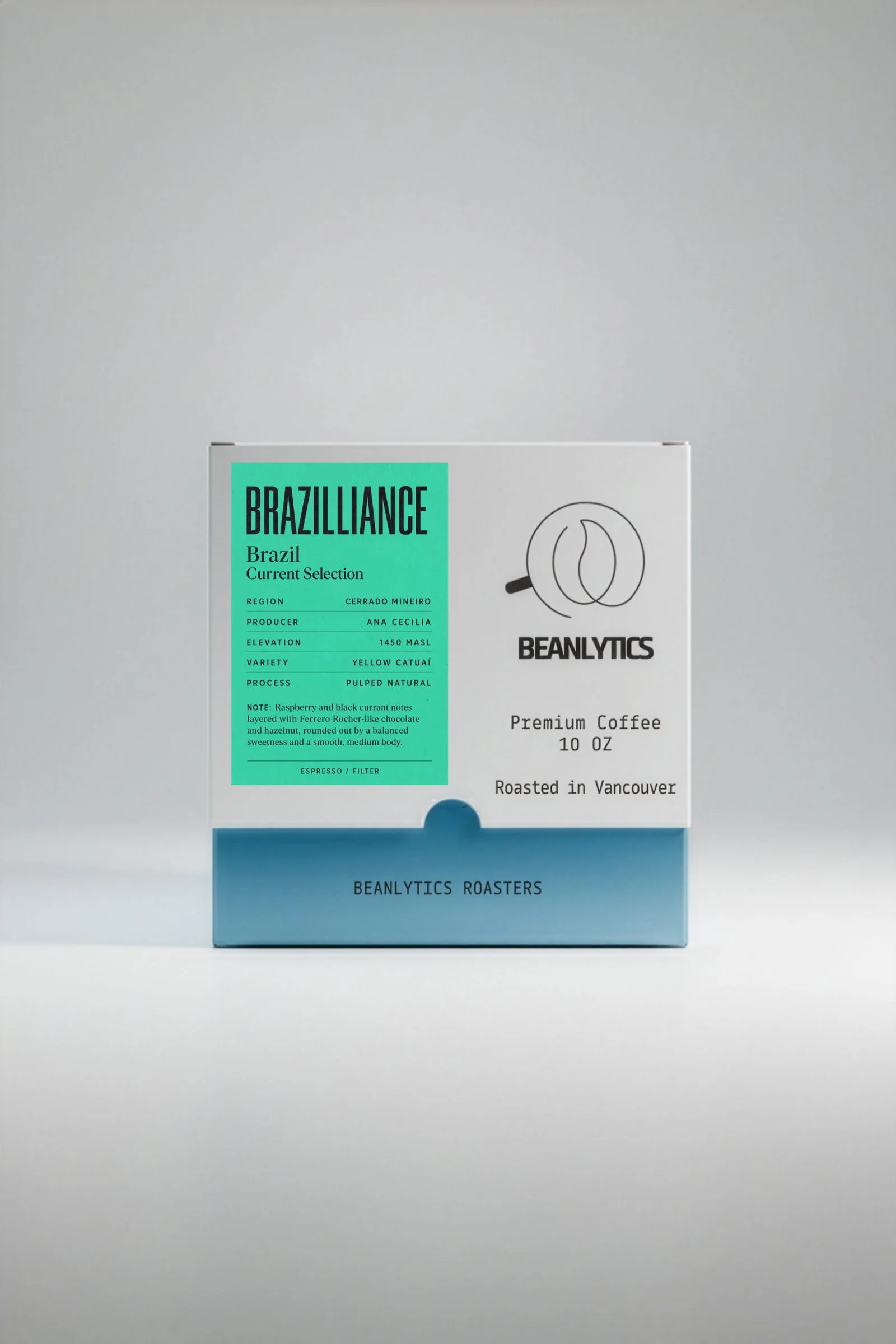
Some green coffee leans that way before it is roasted. Lower-grown lots with fuller body and gentler acidity give the roast more to work with and less fruit to lose. The two chocolate lots on our shelf are also among the lowest-grown coffees we roast. The Brazil Yellow Catuai from Fazenda Sao Luiz in the Cerrado grows at 1,450 metres and is pulped natural, and it tastes of chocolate and hazelnut with raspberry underneath. The Sumatra Mandheling, wet-hulled by the Simalungun and Karo cooperative at 1,200 to 1,300 metres, is heavier again: herbal, earthy and smoky, with orange at the edges.
Because the roast does so much of the work, a chocolatey coffee forgives more. Milk suits it, a coarse grind suits it, and a slightly wrong water temperature does less damage. How roast profiles shape flavour explains what happens at each stage of the roast. The chocolate and nutty collection is where these lots live.
The same bean can go either way
Origin sets the ceiling; roast decides what you get. Roast the Limmu dark enough and the orange goes first, then the honey, and what is left is bitter cocoa and smoke. Roast the Brazil light and its raspberry steps forward while the chocolate thins out. Most of the gap between a “fruity” specialty coffee and a “chocolatey” everyday one comes from the roast rather than the bean.
We roast every single origin as an omniroast, light enough to keep the origin’s character and developed enough to pull as espresso, so the family a coffee belongs to is the family the green coffee put it in. Three lots on the shelf sit on the line between the two, and they are the ones to try if you cannot decide: the Brazil above, the Guatemala Antigua Pacas from Pulcal Farm at 1,750 metres, which tastes of plum and white chocolate with brown sugar and lime, and the Ecuador Sidra, whose cooked lemon comes with caramel and cocoa.
Which to buy
Choose by how you brew and how you take it.
- Espresso with milk: chocolate and nutty. Cocoa and caramel come through milk; fruit mostly does not. Start with the Brazil Yellow Catuai.
- Espresso drunk black: either. A fruity lot pulls a bright, juicy shot that surprises people, and the Guatemala Antigua Pacas is the gentlest way in.
- Pour-over or filter: fruity and floral. Paper and a slower extraction show the acidity and aromatics that make these lots expensive. Start with the Ethiopia Limmu honey, then the Colombia Gesha when you want jasmine and apricot.
- French press or drip: chocolate and nutty, or the Brazil for a bit of both. The heavier body carries the method.
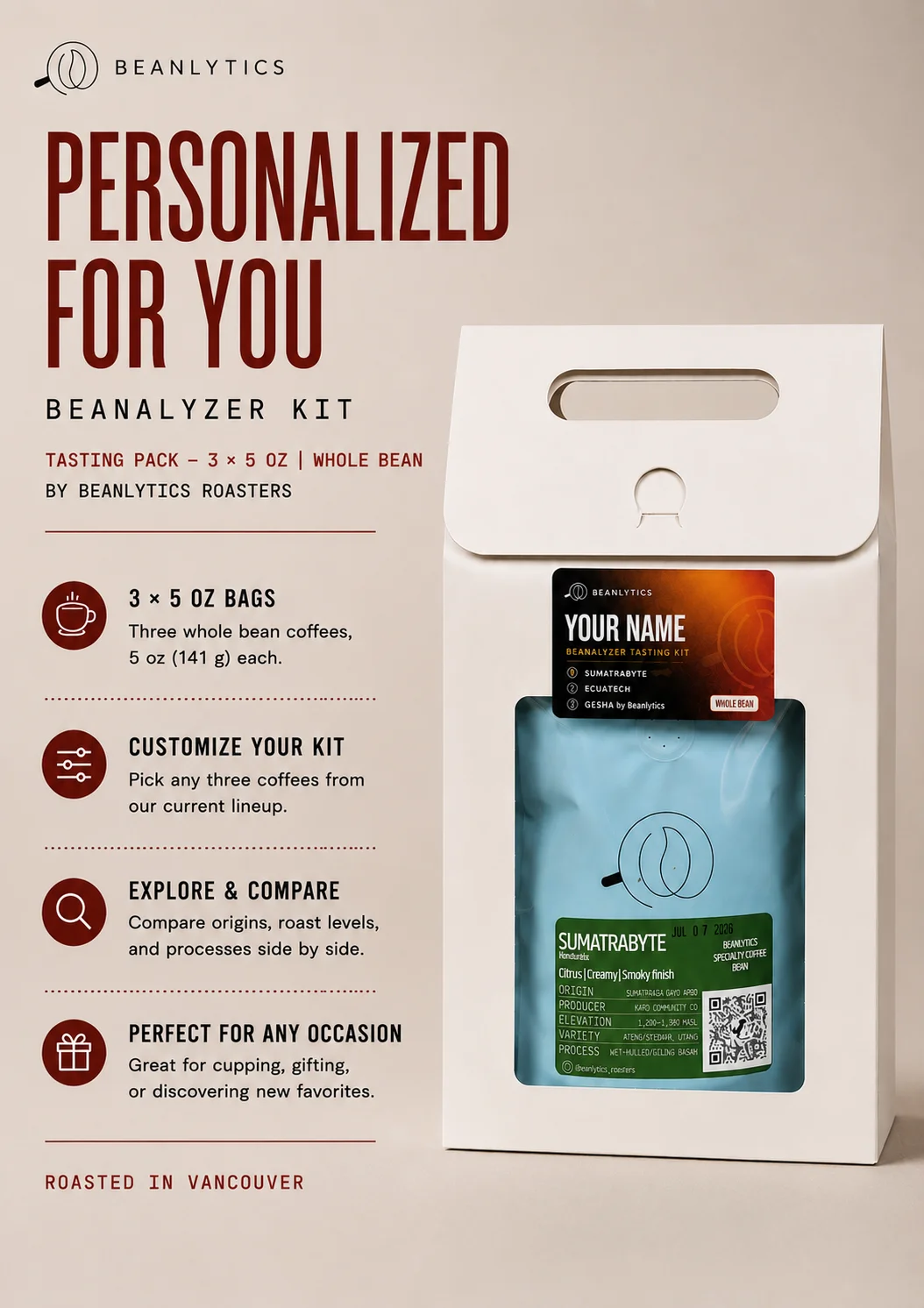
- Still not sure: the tasting kit is three coffees of your choice in 5 oz bags for $39.50. Pick one from each family plus the Brazil, brew them the same way on the same morning, and the question answers itself.
Whichever family you land in, how to choose coffee beans takes it from there: brew method first, then flavour family, then how adventurous you feel.
Questions people ask
What does chocolatey coffee taste like?
Cocoa or dark chocolate, caramel, brown sugar and toasted nuts, with a full, syrupy body and low acidity. It tastes like the coffee most people grew up with, done well: sweet without sugar, and heavy enough to stand up to milk.
What does it mean when coffee is fruity?
That the taster found flavours of fruit in the cup: citrus, berries, stone fruit or tropical fruit, often with florals alongside. The fruit was never added. It comes from the cherry the bean grew in, the variety, and the way the coffee was processed, and it survives because the roast was kept light enough to spare it.
Is fruity coffee sour?
It should be bright rather than sour. Acidity in a well-made fruity coffee reads as lime or apple, with sweetness behind it. Sour with nothing behind it usually means under-extraction: grind finer, use hotter water, or brew a little longer, and the sweetness comes back.
Which coffee tastes most like chocolate?
On our shelf, the Brazil Yellow Catuai. Brazil is the origin most people mean when they say chocolatey coffee, and a pulped natural from the Cerrado at 1,450 metres sits close to the centre of that style. For something darker and smokier around the chocolate, the Sumatra Mandheling.
Which fruity coffee beans are the best?
Best depends on the fruit you want. For citrus and honey, the Ethiopia Limmu. For florals, the Colombia Gesha. For something stranger, the anaerobic Colombia El Diviso Sidra. If rare varieties are the point, what Sidra is and why it costs what it does explains where the price goes.