Coffee 101
Honey Process Coffee: What It Is, How It’s Made and How It Tastes

Honey process coffee is pulped to remove the cherry’s skin and fruit, then dried with the sticky layer underneath, the mucilage, still on the seed. No honey is involved. It sits between washed coffee, cleaned before drying, and natural coffee, dried inside the whole cherry, and the cup usually lands between them too.
I’m the head roaster at Beanlytics in Richmond, BC, and the examples here are two lots we have roasted, one sold as honey and one as pulped natural. For every other method, see how coffee processing shapes flavour.
What honey process coffee is
Every coffee is processed: the seed has to be separated from its fruit and dried before it can be roasted, and the order of those steps names the method. In a honey coffee the skin and fruit come off first, and some or all of the mucilage stays on through drying.
What the mucilage is
Mucilage is the thin, sticky, sugary layer between the cherry’s fruit and the parchment, the papery shell around the seed. A depulping machine strips the skin and fruit but leaves the mucilage behind. A washed coffee then has it removed. A honey coffee keeps it.
Why it is called honey (no honey is added)
The name describes the mucilage. It is sticky, a little like honey to the touch, and as it ferments and dries it often turns golden, which is the explanation Counter Culture Coffee gives. Nothing is added at any point.
How honey process coffee is made, step by step
1. Picking ripe cherries
Cherries are picked at peak ripeness, usually by hand. Cafe Imports, a green coffee importer, notes that the skin comes off within 24 hours of harvest.
2. Pulping, and deciding how much mucilage stays
A depulper squeezes the seeds out of the cherries, and this is where the producer makes the main decision. Counter Culture Coffee explains that depulpers can be set to leave more or less mucilage, and some farms take part of it off with a demucilaging machine or a light rinse.
3. Drying with the mucilage on
The sticky seeds are spread on patios or raised beds and turned so they dry evenly and don’t go mouldy. Unlike a washed coffee, it usually skips the fermentation tank: the mucilage ferments on the bed until the seed reaches about 11 percent moisture, the level Cafe Imports gives. For a lighter result, producers turn the coffee often so it dries fast; for a darker one, they turn it less.
4. How long honey coffee takes to dry
It depends on how much mucilage stays on and on the weather. Counter Culture Coffee says anywhere from a few days to a couple of weeks, and Cafe Imports puts the average at 18 to 25 days. The darker grades take longest, and honey coffees dry faster than naturals, which have the whole cherry to dry through.
5. Milling and resting
Once dry, the coffee goes to a mill, where the parchment is removed and the green beans are sorted, graded and stored somewhere cool and dry until export. Cafe Imports points out that honey coffees often look uneven as green beans, which some roasters used to washed lots find off-putting.
Types of honey process: white, yellow, red and black
Producers name honey coffees by colour. The more mucilage stays on, the darker the coffee turns as it dries, and the further the cup moves toward a natural.
| Grade | Mucilage left on | Drying | How it tends to taste |
|---|---|---|---|
| White | The least; most is removed first | Fastest | Close to a washed coffee, a little sweeter |
| Yellow | A little | Fast, turned often | Mild fruit, still clean |
| Red | About half | Slower, turned less | Sweeter, with more fruit and body |
| Black | The most, or all of it | Slowest | Close to a natural: heavy body, ripe fruit |
What decides the colour
How much mucilage is left on, and how slowly the coffee dries. Mucilage darkens as it oxidises, and the producer names the grade after the colour the coffee reached. There is no official scale, so one farm’s red can be another’s yellow.
White honey
Most of the mucilage comes off first, so it dries fast and tastes close to a washed coffee.
Yellow and red honey
Yellow keeps a little mucilage and is the mildest grade. Red keeps about half and carries more fruit and body.
Black honey
Black keeps the most mucilage and dries slowest. It is the grade closest to a natural, and Cafe Imports compares it with Brazil’s pulped natural.
Many lots carry no colour at all. Ours are listed simply as honey and pulped natural, and we don’t add a grade the producer didn’t give.
What honey process coffee tastes like
A honey coffee is usually sweeter and rounder than a washed coffee, with more body, but cleaner and less fruity than a natural. Cafe Imports describes caramel or burnt-sugar sweetness, nuttiness and sometimes jammy fruit. Counter Culture Coffee describes fruit notes that are stronger than a washed coffee’s but not as strong as a natural’s.
The process is only part of it. Our Limmu cups as navel orange, lemon and lime with honey sweetness; our São Luiz as chocolate and hazelnut with raspberry and black currant underneath. Country, variety and nearly 500 metres of altitude separate them.
How the colour grade changes the cup
Lighter grades keep more of a washed coffee’s clarity and acidity; darker grades add body, ripe fruit and more of the flavour of fermentation. If you like clean, bright coffee, start with white or yellow. If you like a natural’s fruit but want it tamer, try red or black.
Honey vs washed vs natural
| Washed | Honey | Natural | |
|---|---|---|---|
| Removed before drying | Skin, fruit and all the mucilage | Skin and fruit; some or all of the mucilage stays | Nothing; it dries inside the whole cherry |
| Water used | The most, for fermenting and rinsing | Little or none | Very little |
| Risk while drying | Lowest: the sugars are gone | Moderate: the beds must be turned and watched | Highest: the whole fruit can mould or over-ferment |
| Typical cup | Clean and bright, lighter body | Sweeter and rounder, still defined | Fruit-forward, heavy body |
Honey vs washed
A washed coffee is fermented, usually in tanks of water, until the mucilage loosens, then rinsed clean before it dries. Honey skips the tank and the rinse, so it saves water, and none of the acidic washing water is left over to harm plants. See our washed coffees.
Honey vs natural
A natural dries inside the whole cherry, so it takes longest and carries the most fruit into the cup. Honey takes the fruit off first, which speeds up drying and lowers the risk of mould. Our natural-process coffees have their own page.
Two pairs we have roasted that isolate the process
We have roasted Catuai, in its yellow and red forms, as a pulped natural from Fazenda São Luiz and as a natural from Fazenda Recreio; our Catuai page sets them side by side. From Ethiopia, the honey Limmu and an earlier natural from Guji show the same split within one country, and our Ethiopian coffees page describes both.
Is honey process coffee better?
Not by itself; it is a different trade-off. It uses far less water than washing, which matters where water is scarce, and it dries faster, with less risk of spoilage, than a natural. It also gives producers control: by choosing how much mucilage stays and how fast it dries, they can push a coffee toward clarity or toward fruit.
The costs are labour and risk: the beds have to be turned and watched, and Counter Culture Coffee warns that over- or under-fermentation can leave off flavours in the cup. For drinkers, better comes down to taste. If you like a washed coffee’s clarity but want more sweetness, try a honey.
Honey processing in Costa Rica and Brazil
Costa Rica is most often credited with making honey processing popular, and it is where the colour names took hold. Honey is a relatively recent style, most prominent in Costa Rica and increasingly used in El Salvador, Honduras and elsewhere.
Brazil’s version is older and has its own name: pulped natural. Cafe Imports explains that Brazil developed it to speed up drying, while Costa Rican producers use honey mainly to shape flavour. Brazilian pulped naturals dry in about 10 to 15 days, usually on patios, and lean toward toasted nut and chocolate, as ours does. Our only Costa Rican lot so far, a Caturra from Volcan Azul, was a natural, so we have no Costa Rican honey yet.
The honey-process lots we have roasted
Every lot we buy is graded and blind-cupped by a certified Q Grader first, as our roasting and quality page explains.
The Habtamu Gato site, Limmu, Ethiopia
The Habtamu Gato washing station sits at 1,930 masl in Limmu, in Ethiopia’s southwestern highlands. Its coffee is the 74112 and 74110 selections, released by Ethiopia’s Jimma Agricultural Research Centre, and it came to us honey processed. It’s on the shelf as Ethiopia Limmu Honey; our Ethiopian coffee guide covers the region.
Fazenda São Luiz, Cerrado Mineiro, Brazil
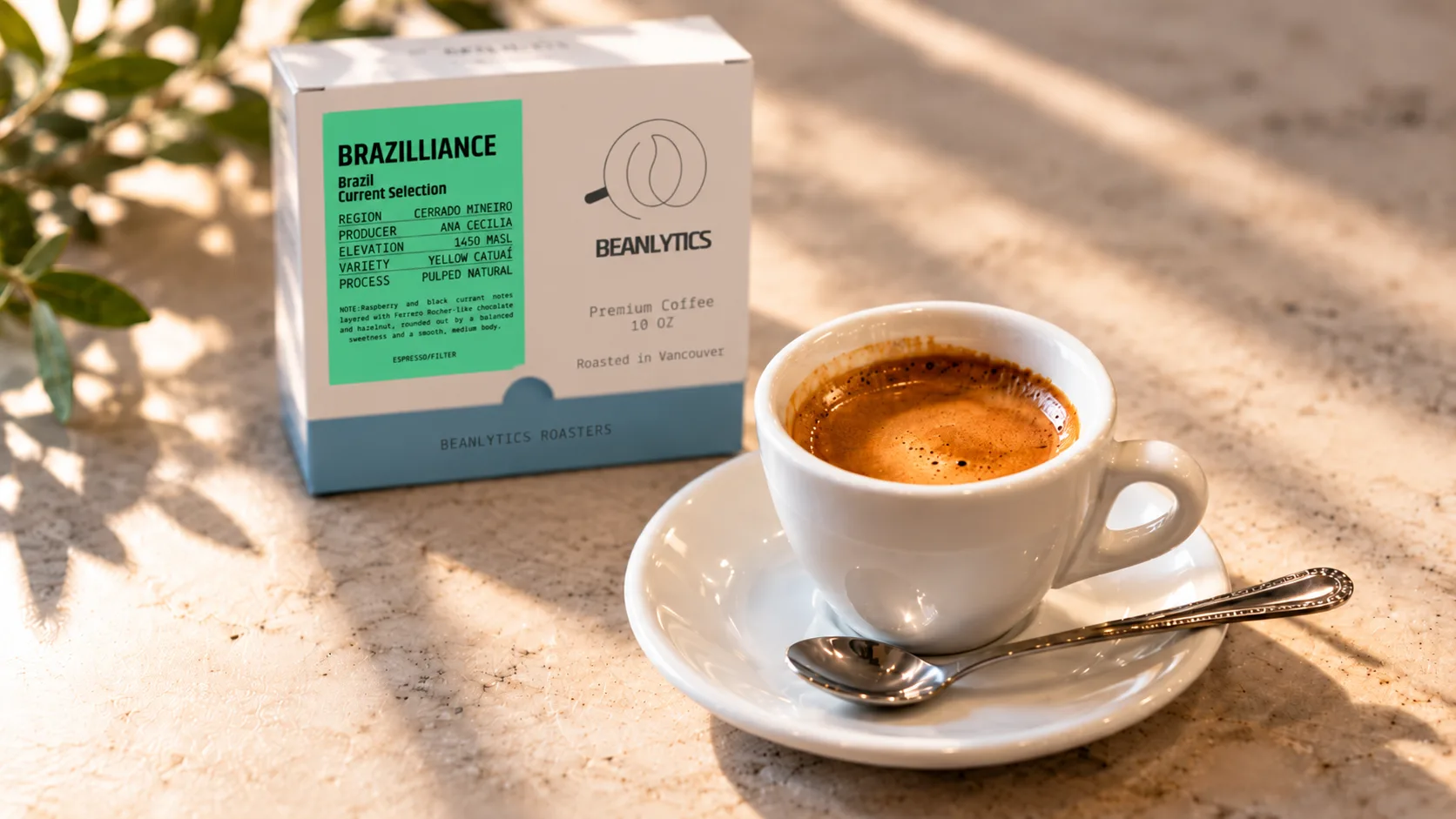
Fazenda São Luiz is a family farm in Cerrado Mineiro that has grown coffee for more than a century, where Ana Cecilia Gondim Velloso and her brother Lucio carry on the family’s work. Their Yellow Catuai grows at 1,450 masl and is pulped natural. You’ll find it as Brazil Yellow Catuai; our Brazilian coffee guide covers the region.
Brewing a honey-process coffee
Brew each one the way its page says. The Limmu is roasted for pour-over, French press and drip, where its acidity stays lively. The São Luiz is roasted for espresso as well as filter, French press and drip. Start from your usual recipe, around 1:16 for pour-over or 18 g in and 36 g out for espresso, then adjust the grind. Our coffee-to-water ratio guide and espresso beans vs coffee beans go further.
Both lots are on our honey-process coffees page, roasted to order in Richmond, BC and shipped across Canada.