Varieties
Sidra Coffee: What It Is, How It Tastes & Why It’s Prized
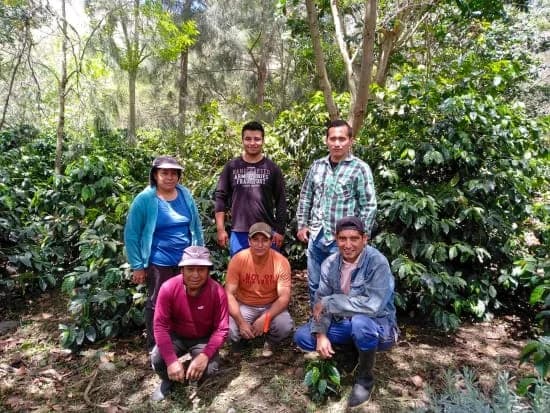
Sidra is one of specialty coffee’s most talked-about varieties: a high-scoring, competition-winning coffee prized for its sweetness, clarity and velvety body. It began as an experiment in the Ecuadorian highlands and has since spread to a handful of elite farms across the Andes. We roast two of them, a washed Sidra from Ecuador and an anaerobic Sidra from Colombia. Here is what the variety is, how it tastes, why it commands the prices it does, and how the same seed can land in your cup two completely different ways.
What is the Sidra variety?
Sidra is an Arabica variety that traces back to a coffee breeding lab in the Pichincha province of Ecuador in the 1990s, where researchers were crossing and selecting plants for both cup quality and yield. A field technician is credited with spotting two seeds that produced exceptional sensory results and helping distribute them to Ecuadorian farms. That was the small beginning of what is now one of the most sought-after coffees in the world.
Its exact genetics are still debated, and that is part of what makes Sidra interesting. For years the accepted story was that Sidra is a hybrid of two foundational Arabica varieties: Bourbon, known for sweetness and balance, and Typica, one of the oldest cultivated varieties, prized for a clean, refined cup. More recent genetic testing points a different direction, suggesting Sidra descends from Ethiopian landrace coffee, the genetically diverse heirloom plants from coffee’s birthplace, acclimatized to Ecuadorian terroir over time. Whichever proves true, the practical result is the same: a variety with unusual clarity, sweetness and aromatic complexity.
| Sidra at a glance | |
|---|---|
| What it is | An Arabica variety selected in a breeding lab in Pichincha, Ecuador, in the 1990s. |
| Genetics | Long described as a Bourbon and Typica cross. More recent genetic testing points to Ethiopian landrace ancestry. |
| Where it grows | Small volumes on high-altitude farms in Ecuador and Colombia, the best of it above 1,800 metres. |
| Cup | High sweetness, crisp clean acidity and a silky body, with stone fruit, citrus, brown sugar and delicate florals depending on farm and processing. |
| Our lots | Ecuador, Finca Terrazas del Pisque, Pichincha, 2,100 m, washed. Colombia, El Diviso, Pitalito, Huila, 1,850 m, anaerobic washed. |
| Why it costs more | Low yield, high altitude, tiny volumes and competition demand. |
Why is Sidra coffee expensive?
Sidra is expensive because it is a low-yielding variety grown at high altitude in tiny volumes, it is labour-intensive to pick and process, and competition success has pushed demand past supply. The price reflects genuine scarcity rather than hype. Four things stack up:
- Low yield. The variety produces less per tree than the workhorse varieties and is susceptible to disease, so it occupies land a producer could plant with something safer and more productive.
- High altitude. The best Sidra grows above 1,800 metres, where harvests are smaller and picking is slower and more labour-intensive.
- Tiny volumes. Only a handful of farms grow it well, and competition success has pushed demand and green-coffee auction prices up faster than supply.
- Careful processing and freight. Micro-lots from a single Andean farm are processed with care and shipped in small quantities to a roaster.
What you are paying for is a rare variety, grown high, picked ripe, and processed with care, which are the reasons it tastes the way it does.
Where Sidra grows, and why altitude matters
Sidra is still rare. It grows in small volumes on high-altitude farms, first in Ecuador’s Andes and now in pockets of Colombia. Altitude is central to the variety’s reputation: the higher and cooler the farm, the more slowly the cherries mature, and slow maturation concentrates sugars and acids in the bean. That is why the best Sidra tends to come from farms well above 1,800 meters.
Our two Sidra lots bracket that range. The Ecuadorian sits at 2,100 m in Pichincha, the same province the variety came from, and the Colombian at 1,850 m in Huila, Colombia’s premier specialty-growing department. Same variety, two of the best terroirs it grows in.
Why Sidra became a competition favorite
Part of Sidra’s fame comes from the competition stage. Its combination of high sweetness, layered aromatics and clean structure makes it a natural fit for brewing and barista competitions, where judges reward clarity and complexity, and wins on that stage drive demand at auction. That reputation cuts both ways: it is why Sidra is so admired, and also why it is expensive and hard to find. For a home drinker the takeaway is simpler. Sidra is a variety bred and selected for the cup, so it tends to over-deliver on flavor for its category.
What does Sidra taste like?
Across origins, Sidra is defined by high sweetness, a crisp, clean acidity, and a smooth, almost silky body. Depending on farm and process it leans toward stone fruit, citrus, brown sugar and delicate florals: complex but never harsh. It is the kind of coffee that makes people stop and ask what they are drinking.
You can taste the range in our two lots. The washed Ecuadorian (ECUATECH) shows cooked lemon, caramel and cocoa with balanced acidity and a mellow, fruit-like sweetness, which is classic, polished Sidra. The anaerobic Colombian (ColomBias Anaerobic) pushes into honeysuckle, butter cookie, lime and cherry blossom with a caramelized sweetness: the same varietal clarity, dialed up and floral.
Sidra vs Gesha: how they differ
Sidra is often mentioned in the same breath as Gesha (also spelled Geisha), the other superstar variety, which traces to the Gori Gesha forest in Ethiopia and was made famous in Panama. Both are high-altitude, low-yield, competition-grade varieties, but they taste distinct:
| Variety | Roots | Flavor signature | Our lot |
|---|---|---|---|
| Sidra | Ecuador (Pichincha); Ethiopian landrace (long described as a Bourbon and Typica cross) | Stone fruit, citrus, brown sugar; structured sweetness, silky body | ECUATECH · ColomBias Anaerobic |
| Gesha | Ethiopia (Gori Gesha forest), via Panama | Jasmine, bergamot, tropical fruit; tea-like, delicate, perfumed | GESHA by Beanlytics |
Rule of thumb: Gesha is the floral, tea-like, perfumed one; Sidra is the sweeter, more structured, stone-fruit-and-brown-sugar one. If you want to taste the difference for yourself, our GESHA by Beanlytics sits right alongside both Sidras in the fruity & floral collection.
How processing reshapes Sidra: washed vs anaerobic
The clearest way to understand Sidra is to taste it processed two ways, which is exactly what our two lots let you do.
In the washed process, the fruit is removed from the bean before drying. This produces a clean, transparent cup that shows the variety and terroir with as little interference as possible. Our Ecuadorian Sidra is a textbook example: precise, bright, sweet.
In anaerobic washed processing, the cherries first ferment in a sealed, oxygen-free tank before washing. That controlled fermentation amplifies aromatics and pushes the cup toward more intense florals and fruit, which is why our Colombian Sidra reads as honeysuckle and cherry blossom where the Ecuadorian reads as lemon and cocoa. Same seed, different signature, decided in the processing.
The two Sidra lots we roast
- Ecuador washed Sidra: Finca Terrazas del Pisque, Pichincha, 2,100 m. Cooked lemon, caramel and cocoa. Sidra from the province where the variety began.
- Colombia anaerobic-washed Sidra from El Diviso: El Diviso, Pitalito, Huila, 1,850 m. Honeysuckle, butter cookie, lime and cherry blossom.
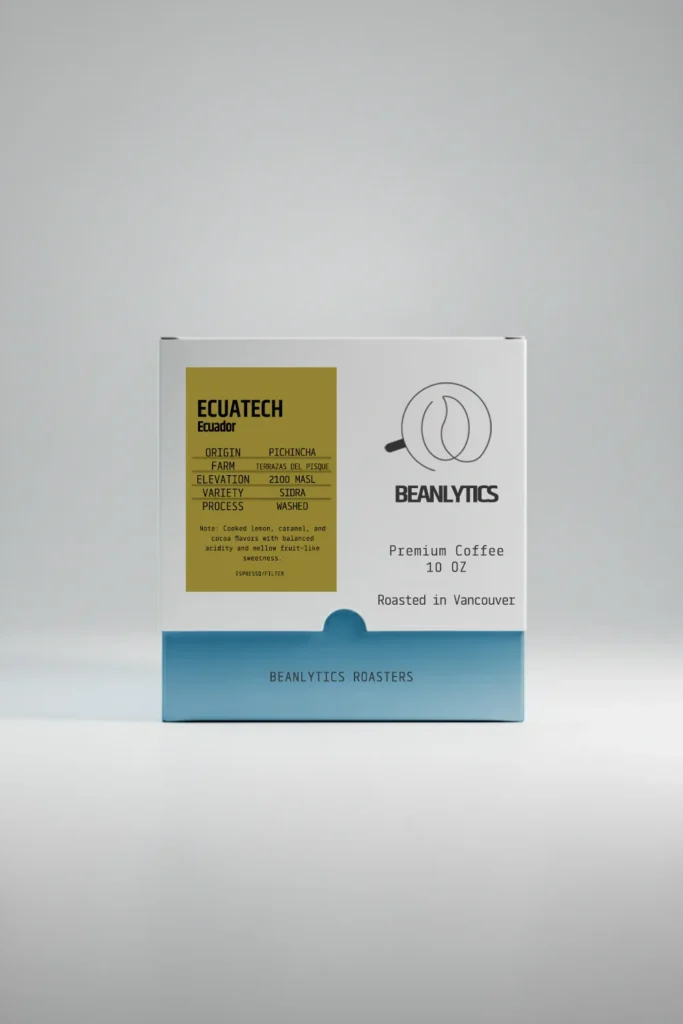

Both are single-origin, roasted to order in Richmond, BC. You will find them in our fruity & floral collection, alongside the rest of our coffees.
How we source our Sidra
Sidra this good doesn’t come from volume farms. It comes from small, named producers who grow it deliberately. Our Ecuadorian lot is grown at Finca Terrazas del Pisque in Pichincha, a 38-hectare farm with roughly 15 hectares planted to coffee, high in the Andes near where the variety first appeared. Our Colombian lot comes from El Diviso, the family farm of producer Nestor Lasso in Bruselas, Pitalito, in the Huila department, a name well known in specialty circles for careful, experimental processing.
In both cases we buy small, traceable lots and roast them to order, so the work that went into growing and processing them isn’t lost on the way to your cup. Every bag carries the farm, region, altitude, variety and process. No guesswork, no blending. For more on each region and how we source there, read our Ecuadorian Coffee Guide and Colombian Coffee Guide.
How to brew Sidra
Sidra rewards a brew method that shows off clarity, so filter and pour-over are ideal. A V60 or Chemex lets its sweetness and delicate florals come through cleanly. Start at a 1:16 ratio (about 15 g of coffee to 240 ml of water) at 93 to 96°C, and grind medium. Because both of our Sidra lots are omniroast, they also pull a bright, dynamic espresso if you prefer. Expect a lively, fruit-forward shot rather than a classic chocolate one.
Sidra coffee: frequently asked questions
What does Sidra coffee taste like?
High sweetness, a crisp clean acidity, and a smooth, silky body, with notes that range from stone fruit and citrus to brown sugar and delicate florals depending on the farm and processing. Our washed Ecuadorian shows lemon, caramel and cocoa; our anaerobic Colombian leans honeysuckle and cherry blossom.
Where does Sidra coffee come from?
It originated in the Pichincha province of Ecuador in the 1990s and is now also grown on select high-altitude farms in Colombia. We roast one from each country.
Is Sidra the same as Gesha?
No. Both are prized, high-altitude, low-yield varieties, but Gesha is floral, tea-like and perfumed (jasmine, bergamot), while Sidra is sweeter and more structured (stone fruit, brown sugar). They are often compared because both sit well above the everyday-coffee category.
Why is Sidra coffee so expensive?
It is a low-yielding variety grown at high altitude in tiny volumes, it is labor-intensive to pick and process, and competition success has driven demand well past supply. The price reflects genuine scarcity.
Can I use Sidra for espresso?
Yes. ECUATECH is omniroast, so it pulls espresso as well as filter. Expect a bright, fruit-forward shot rather than a traditional chocolatey one.
Is Sidra a Bourbon variety?
Probably not. Sidra was long described as a cross of Bourbon and Typica, and you will still see it sold that way, but genetic testing, including a 2026 study of Ecuadorian specialty cultivars, groups it with Ethiopian landrace varieties instead. It came out of Ecuador and is now grown in small quantities across the northern Andes.
Is Sidra coffee Arabica?
Yes. Sidra is 100% Coffea arabica, a specialty selection prized for its clarity and sweetness rather than a different species.
Want to taste the two Sidras side by side? Build a Beanalyzer tasting kit with both and see for yourself how origin and process reshape a single variety.