Origins & Sourcing
Colombian Coffee Guide: Origin, Flavor & Sourcing
Colombian coffee is the one almost everyone has tasted: the balanced, clean, mild cup that became the world’s reference point for “good coffee.” That supermarket reputation hides how much range the origin actually has.
At the specialty end, Colombia produces some of the most expressive, floral and fruit-driven coffees anywhere, and the Huila region in particular, where all three of our lots come from.
This guide covers where Colombian coffee grows, the varieties behind it, what it tastes like, and whose farms ours come from.
Is Colombia the world’s biggest coffee producer?
No. That is Brazil.
Colombia is consistently the world’s third-largest producer, but it holds a title that matters more for quality: it is the largest producer of washed arabica, and for decades the benchmark for clean, balanced, mild coffee.
Nearly all Colombian coffee is hand-picked arabica grown on small family farms across the Andes. High mountains and two harvests a year in many regions let the country ship fresh crop almost year-round. Scale isn’t the story here. Consistency and altitude are.
Where Colombian Coffee Grows
Colombia’s coffee grows the length of the Andes, and the region names carry real flavor differences:
- Huila. The southern powerhouse and Colombia’s most awarded specialty region: high altitude, volcanic soil, and the fruit-forward, floral cups that define modern Colombian coffee. All three of our Colombian lots come from here.
- Nariño and Cauca. The far south, some of the highest coffee farmland in the country, prized for bright, sweet, complex cups.
- Tolima, Antioquia, and the classic Coffee Axis. The traditional heartland behind the balanced, caramel-and-citrus profile most people picture.
Altitude is the throughline. Our Huila lots grow between 1,650 and 1,850 meters, where cool mountain nights slow the cherries and concentrate sugars. That is the foundation of Huila’s signature sweetness and acidity.
| Region | Known for | Our lots |
|---|---|---|
| Huila | High altitude and volcanic soil; the fruit-forward, floral cups that define modern Colombian coffee | All three, at 1,650 to 1,850 m |
| Nariño and Cauca | The far south, some of the highest coffee farmland in the country; bright, sweet, complex | — |
| Tolima, Antioquia and the Coffee Axis | The traditional heartland; the balanced caramel-and-citrus profile most people picture | — |
The Varieties: Workhorses and Modern Stars
Most Colombian coffee runs on hardy, disease-resistant workhorses bred for the country’s climate. Castillo, Colombia and Caturra deliver the dependable, balanced classic profile.
Huila’s specialty producers are better known for the modern varieties, and those are the ones we carry:
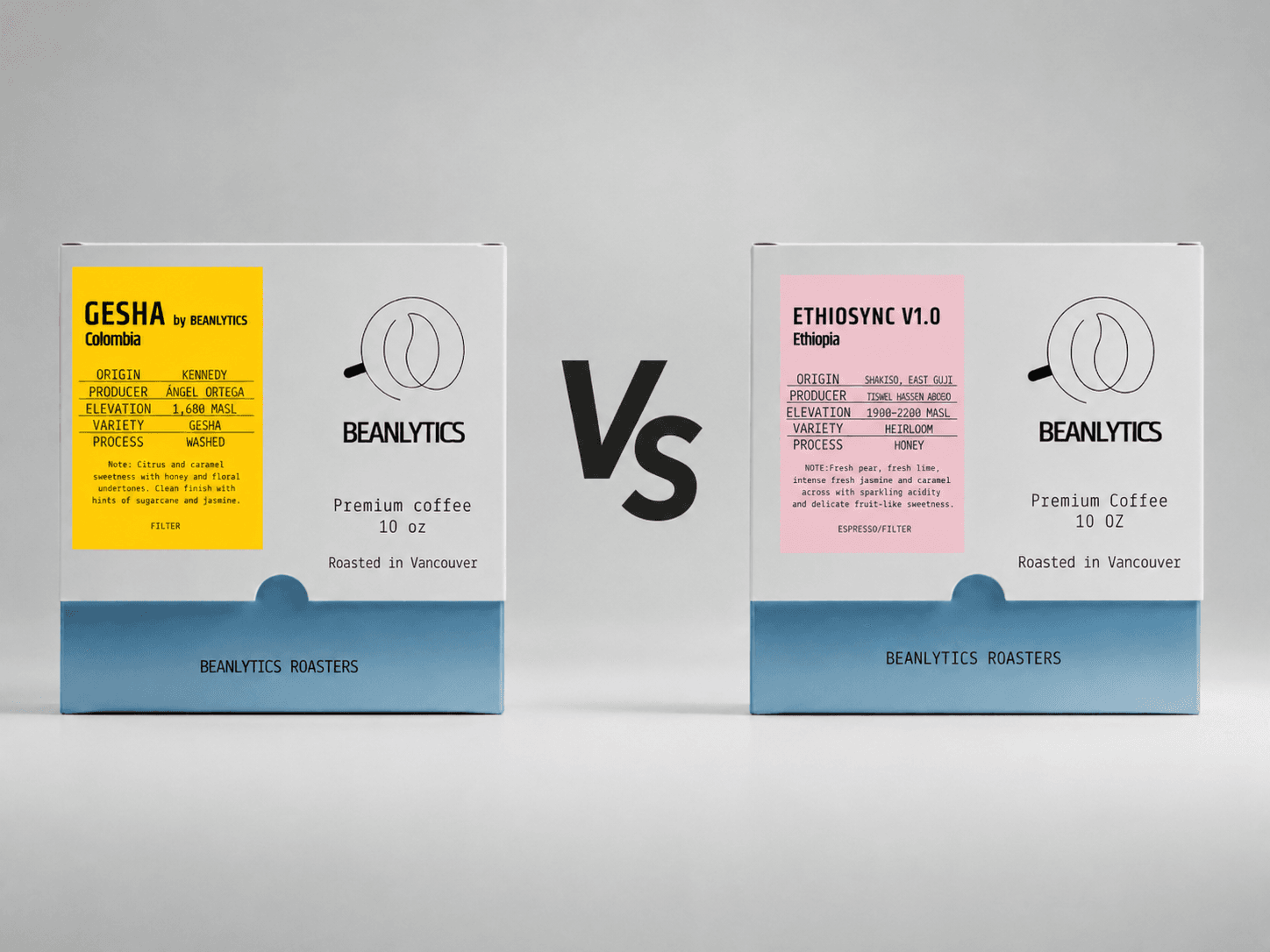
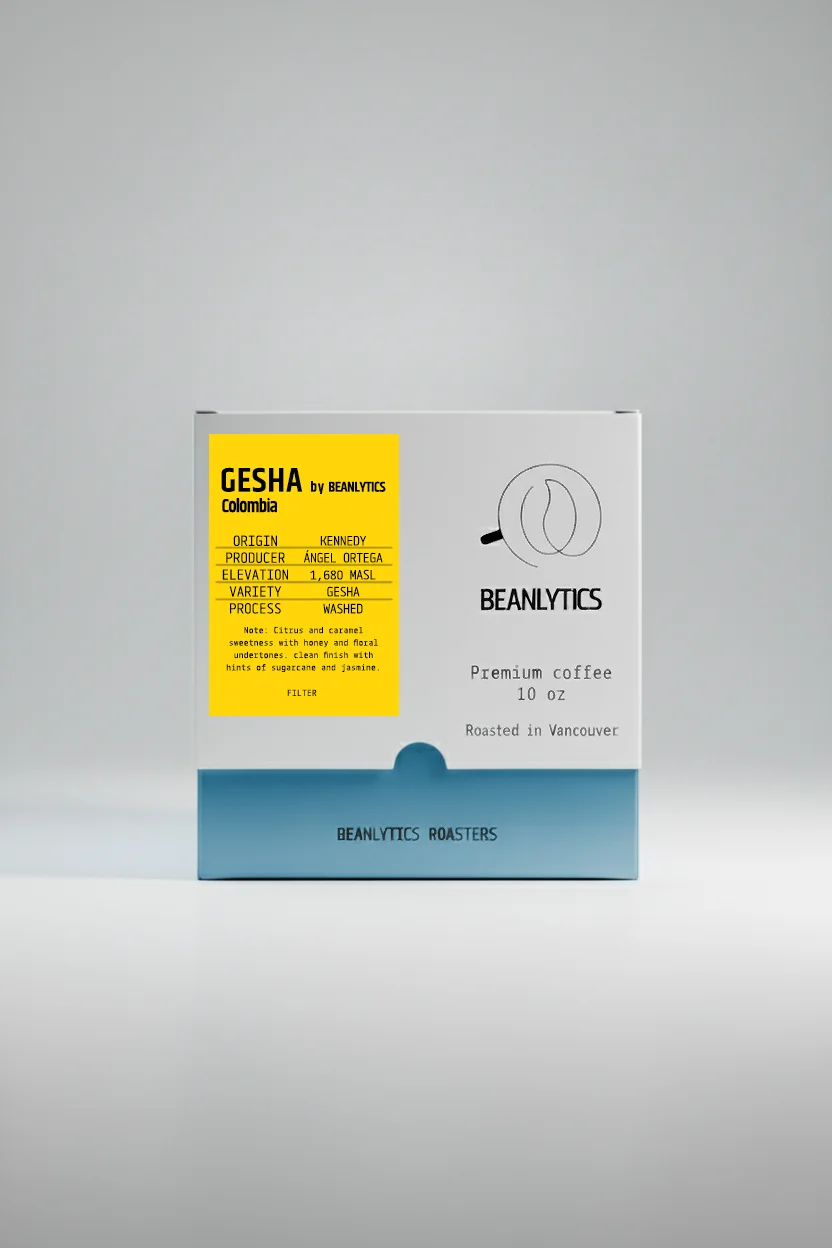
- Gesha. Known for intense jasmine, bergamot and tropical fruit.
- Pink Bourbon. An expressive selection, part of our past Gesha lot from Finca Miramar.
- Sidra. A delicate, aromatic variety that shows well under experimental processing.
A bedrock of reliable varieties plus a frontier of exotic ones is why Colombia can be both the safest and the most interesting origin on a menu.
What Does Colombian Coffee Taste Like?
Classic Colombian coffee tastes balanced and sweet: caramel, red apple and citrus over a medium, smooth body, with just enough acidity to keep it lively. It is the origin that rarely offends and always satisfies.
The Huila specialty lots push much further into fruit and florals, and our current coffees show that range:
- Colombia El Diviso Sidra. A Sidra lot with honeysuckle, lime, cherry blossom, and a caramelized sweetness from experimental fermentation.
- Colombia Huila Decaf. Crisp fruit, a floral lift and a polished cocoa finish, from Elias Roa Parra in Acevedo, decaffeinated with ethyl acetate from sugarcane.
How It’s Processed
Colombia built its name on the washed process, fermenting and rinsing the fruit off the bean before drying, which is what produces that clean, bright, well-defined cup.
Most Colombian coffee is washed, including our decaf.
Huila is also a hotbed of experimentation, and our Sidra lot is anaerobic washed: it went through a sealed, low-oxygen fermentation before being washed and dried. It cups as honeysuckle, butter cookie and lime, with cherry blossom and a caramelized sweetness.
For the deeper mechanics, we have written about how processing shapes flavor in specialty coffee.
How We Source Our Colombian Coffee
Our Colombian coffees, current and past, come from named family farms in Huila:
- El Diviso, in Bruselas, Pitalito. Our anaerobic Sidra comes from here, produced by Nestor Lasso.
- Finca Miramar, in San Agustín, where Ángel Ortega grew our Gesha and Pink Bourbon lot, now sold out, on volcanic soil at 1,680 meters.
- Elias Roa Parra, in Acevedo, a well-known Huila producer and founding president of his local growers’ association, who grew our washed decaf lot.
Buying from named farms rather than anonymous blends is the whole point, and it is the same standard we hold every lot to. We cover it in how sustainable coffee sourcing impacts every cup.
How to Brew Colombian Coffee
Colombia is the great all-rounder and brews well almost any way, but pour-over is where the Huila lots sing.
A V60 or Chemex at a 1:16 ratio with water around 93°C gives the florals and fruit room to show. Getting the coffee-to-water ratio right matters most with an expressive lot like the El Diviso Sidra. Being anaerobic, it is worth brewing a little cooler, around 88 to 92°C.
The classic balanced profile also makes a sweet drip or French press for everyday brewing.
Common Questions
Why is Colombian coffee so popular?
Consistency. Colombia’s altitude, hand-picking, washed processing and near-year-round harvest deliver a reliably clean, balanced, sweet cup that works for almost everyone. That is why it became the world’s reference point for quality coffee and the base of countless blends.
Is Colombian coffee strong?
Not in the heavy, dark-roast sense. Colombian coffee is known for balance and brightness rather than bold, roasty intensity. Its “strength” is clarity and sweetness. For a deeper, chocolatier cup, a Brazilian coffee is the smoother, lower-acid counterpart.
Does Colombia make good decaf?
Yes. Colombia is one of the best origins for decaf, because the underlying coffee is clean enough to survive decaffeination with its character intact.
Our washed Colombia Huila Decaf from Elias Roa Parra in Acevedo keeps crisp fruit and a cocoa finish with the caffeine removed.
The Bottom Line
Colombia is the origin everyone thinks they know, and specialty Huila is the version most people haven’t met yet.
Balanced and sweet at the classic end, floral and fruit-driven at the frontier, all grown on named family farms in one of the world’s great coffee regions.
Whether you want an easy everyday cup or an exotic Gesha, this is the origin that covers the most ground. If you want the bright, floral extreme next, our Ethiopian coffee guide covers coffee’s birthplace.
Try it fresh: the anaerobic Sidra or the Huila decaf, roasted to order, or keep Colombia in rotation with a Beanlytics subscription.
The lots we have from these regions are collected on one page: Colombian coffee beans, each with its farm, altitude and variety.