Varieties
SL28 Coffee: Kenya’s Prized Variety, and How SL34 Differs
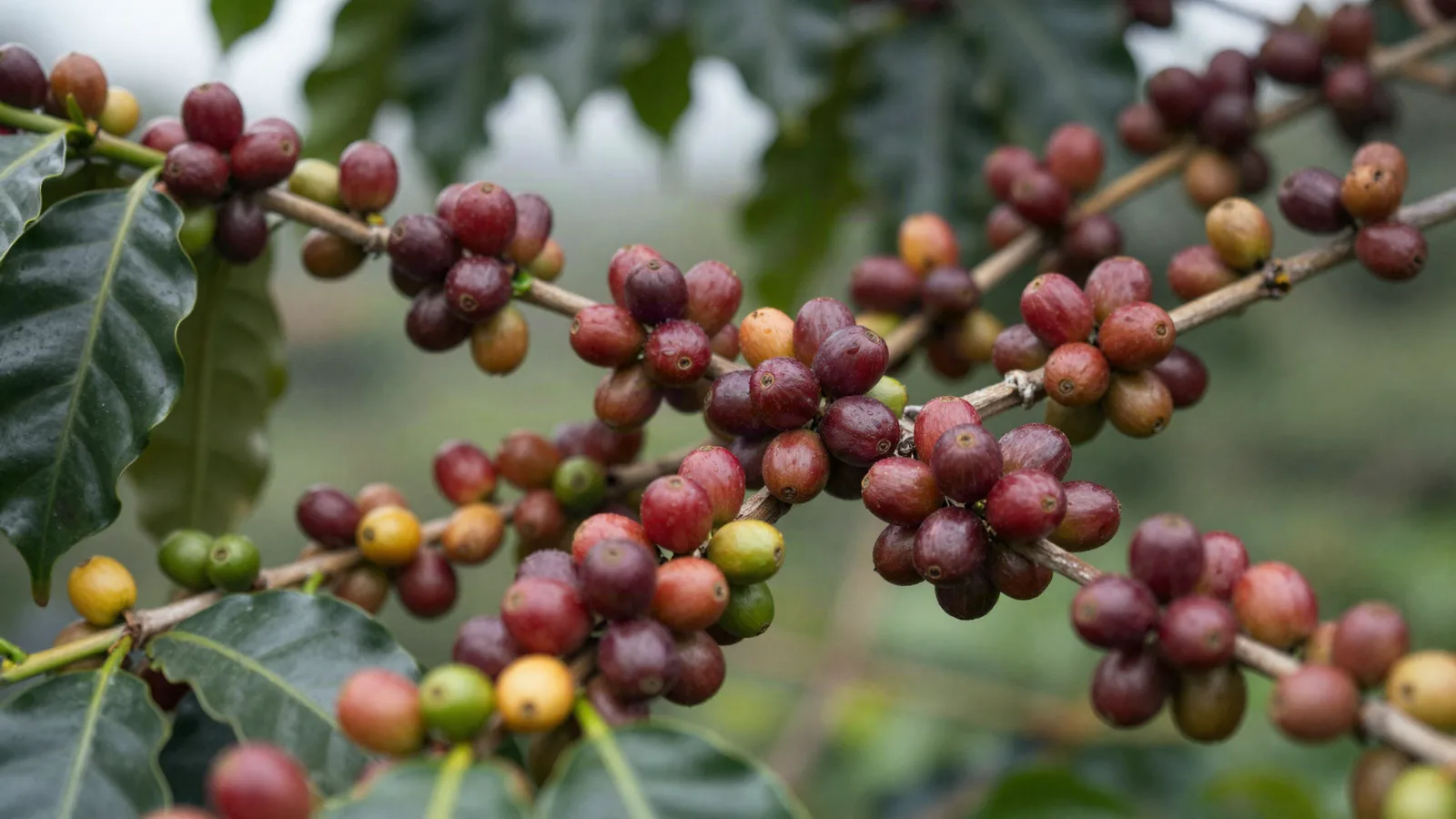
SL28 is an Arabica coffee variety selected in Kenya in the 1930s at Scott Agricultural Laboratories, from a drought-resistant population collected in Tanganyika, now Tanzania. Genetic tests link it to the Bourbon group. It yields little and is susceptible to the major coffee diseases, but World Coffee Research rates its quality potential at high altitude as exceptional.
I’m the head roaster at Beanlytics in Richmond, BC. My example is our Kenyan coffee, Kenyaphonic, a washed lot from Karindundu Nyeri in Karatina, Nyeri County, grown at 1,700 masl. Its variety is listed as SL 28 and SL 34 together, so SL34 gets as much space here as SL28.
What SL28 is
A variety is a genetically distinct line within a coffee species, and the variety on a bag tells you which plant the cherries grew on. SL28 is one Arabica variety. Pacamara and Sidra, both on our shelf, are two others, covered in our guides to Pacamara coffee and the Sidra variety, and our article on how coffee genetics shape flavour covers the wider family.
World Coffee Research’s variety catalogue describes SL28 as a tall plant with large beans and low yield potential. It is drought tolerant and suited to medium to high altitudes. The catalogue even uses SL28 as a yardstick: its bean-size scale reads “Caturra = Average, SL28 = Large, and Maragogipe = Very Large”, and its yield scale gives SL28 as the example of Low. For comparison, the same catalogue rates Pacamara’s beans as very large.
Where SL28 came from
Scott Agricultural Laboratories was set up by Kenya’s colonial British government in 1922 and is now the National Agricultural Laboratories at Kabete. In 1931 its senior coffee officer, A.D. Trench, toured Tanganyika and noticed coffee in the Moduli district that seemed to tolerate drought, disease and pests. Seed went back to the laboratories, where its drought resistance was confirmed. That population, called Tanganyika Drought Resistant, was widely distributed until its offspring replaced it: SL28, selected from a single tree in 1935.
Between 1935 and 1939 the laboratories selected 42 trees of various origins and studied them for yield, quality, drought resistance and disease resistance. Each of those tree selections was labelled SL. World Coffee Research calls SL28 “the prize selection of this period of intensive breeding.” Its catalogue gives SL28 a “Bourbon-like genetic background” and says recent genetic tests confirmed the link to the Bourbon group.
SL28 vs SL34
SL34 came out of the same program in the late 1930s, from a single tree on the Loresho Estate in Kabete, one of the private estates the laboratories worked with. The tree was labelled French Mission, a name widely understood to mean Bourbon: Spiritan missionaries planted Bourbon seed from La Réunion at the mission they founded at Bura in 1893, and took the seedlings to their mission at Saint Austin, near Nairobi, in 1899.
So you would expect SL34 to be a Bourbon, yet World Coffee Research reports that genetic tests relate it to the Typica group, and that the French Mission story “could be incorrect.” SL28, the one selected from Tanzanian stock, is the Bourbon relative.
| SL28 | SL34 | |
|---|---|---|
| Selected | 1935, from Tanganyika Drought Resistant | Late 1930s, from one tree on Loresho Estate, Kabete |
| Genetic group | Bourbon related | Typica related |
| New leaf tips | Mainly green, occasionally bronze | Dark bronze, a few green |
| Bean size | Large | Large |
| Yield potential | Low | Medium |
| Quality potential at high altitude | Exceptional | Exceptional |
| Growing conditions | Drought tolerant, medium to high altitude | High altitude with good rainfall |
| Leaf rust and coffee berry disease | Susceptible | Susceptible |
| Where it is found | Commonly in Kenya, Malawi, Uganda and Zimbabwe | Mostly in Kenya |
All of these rows come from World Coffee Research. On the tree, the leaf tips are the visible difference: SL28’s new leaves come in mostly green, SL34’s dark bronze. In the cup, the catalogue’s one-line summaries differ slightly, “very good cup quality potential” for SL28 and “exceptional cup quality” for SL34. I can’t separate the two in our lot. They come to us as one coffee, and I would be guessing if I said which note came from which tree.
What SL28 tastes like
Coffee Review’s 2015 report on 32 Kenyan coffees found that nearly all its high-rated samples came mainly from SL28 and SL34 trees, often with a little Ruiru 11 mixed in. It calls black currant the coffee industry’s favourite word for the sweet, pungent fruit of fine Kenyan coffees, where it can sit among sweet tomato notes and citrus such as tangerine and blood orange, sometimes with savoury, herb-like hints.
Taya Brown, a researcher at the green coffee importer Cafe Imports, told Barista Magazine that the varieties grown in Kenya likely contribute significantly to the flavours the country is known for. Altitude and processing play their part too, so SL28 pushes a cup toward that profile, and the farm and the mill decide how far it goes.
Our tasting notes for Kenyaphonic read: “black currant and blood orange burst forward alongside ripe mango, carried by a sparkling, almost effervescent acidity.” Two of those notes are on Coffee Review’s list for fine Kenyas. The mango is this lot’s own.
How Kenyan coffee is processed and graded
The Kenyan washed process
Kenya gave its name to a washed method with an extra soak. Taya Brown explains in the same Barista Magazine piece that the coffee is fermented and washed, then soaked in water, which is why it gets called the Kenyan process or double washed. Brown traces the soak to drying space: when more coffee reaches the mill than the patios and raised beds can hold, Kenyan mills often keep the washed coffee underwater, cool and safe from insects, until there is room. The extra steps also give the mill more chances to pick out defects. Our guide to washed coffee walks through the standard method.
Our lot is listed simply as washed. Its record doesn’t say whether it was soaked, so I won’t claim it was.
AA and AB are bean sizes
TYPICA, a direct-trade green coffee platform, explains that grades such as AA and AB are set “solely by screen size”, the physical size of the bean, with no tasting involved. On Cafe Imports’ chart of green coffee grades, Kenya AA is screen 17 to 18 and AB is 15 to 16. The letters say nothing about variety. Kenyaphonic is sold without a size grade, and I don’t add one.
Low yield, disease and the newer Kenyan varieties
SL28’s weak point is disease. World Coffee Research lists it as susceptible to coffee leaf rust, coffee berry disease and nematodes, and its yield is low. In its favour, besides the cup, is what the catalogue calls rusticity: SL28 can be left untended for years or even decades and then return to production, and there are SL28 trees in many parts of Kenya that are 60 to 80 years old and still productive.
Kenya’s answer to the diseases has been to breed new varieties with SL28 in them. World Coffee Research records that a coffee berry disease epidemic in 1968 cost Kenya half its production, and that the research station at Ruiru began breeding for resistance in the 1970s. Ruiru 11, released in 1985, is a compact, high-yielding hybrid whose male parent draws its cup quality from lines including SL28 and SL34. Batian, released in 2010, is a tall variety with SL28 and SL34 among its parents, resistant to coffee berry disease and tolerant of leaf rust.
Coffee Review’s 2015 report describes buyers’ fear that these newer varieties would flatten Kenyan coffee, and found little sign of it in that year’s samples.
Our SL28 and SL34 lot
World Coffee Research puts SL28’s optimal altitude above 1,200 metres for farms within five degrees of the equator. Karatina is about half a degree south of the equator, and Kenyaphonic grew at 1,700 metres, 500 above that line.
I roast it to order in small batches in Richmond, BC. Its page lists filter, pour-over, French press and drip as the methods it suits, and I don’t recommend it for espresso. For a V60 pour-over, start at 1:16, and for French press at 1:15, the starting points in our coffee-to-water ratio guide. Other lots roasted for the same methods are on our coffees for filter brewing page.
Questions people ask
What does SL mean in coffee?
SL stands for Scott Laboratories, short for Scott Agricultural Laboratories, the research station in Kenya where the selections were made. Every tree selection made there between 1935 and 1939 carried the SL prefix and a number. SL28 and SL34 are two of those numbered selections.
What is the difference between SL28 and SL34?
Both came out of Scott Laboratories in the late 1930s, and World Coffee Research rates both exceptional for quality potential at high altitude. SL28 came from drought-resistant Tanzanian stock, is Bourbon related and yields little. SL34 came from a single tree on a Kabete estate, is Typica related, yields more and suits high ground with good rainfall.
What does SL28 taste like?
Coffee Review calls black currant the coffee industry’s favourite word for fine Kenyan coffees, where it can sit alongside citrus such as tangerine and blood orange and a sweet tomato note. Our washed SL28 and SL34 lot tastes of black currant, blood orange and ripe mango, with a sparkling acidity.
Is SL28 grown outside Kenya?
Yes. World Coffee Research says it spread from Kenya to other parts of Africa, where it is important in Uganda’s Arabica regions, and now to Latin America. Coffee Review wrote in 2015 that too little had reached the market to judge how well it keeps its character elsewhere, though an SL28 from the Kona region of Hawaii cupped very much like a fine Kenya and scored 94.
Which Kenyan coffee is considered the best?
There is no official answer, and taste decides. The AA grade only means the largest beans: TYPICA reports that its quality team’s scores for AA and AB from the same station usually differ by no more than about 0.25 points. Coffee Review notes that virtually all the high-rated Kenyan coffees it reviews come from the traditional growing regions between Nairobi and Mount Kenya, so the variety and the region on a bag tell you more than the grade does.
Kenyaphonic is on our Kenyan coffees page, roasted to order in Richmond, BC and shipped across Canada.