Origins & Sourcing
How Sustainable Coffee Sourcing Impacts Every Cup

The coffee in your mug this morning passed through many hands before it reached you: the family that picked the cherry, the station that dried it, the exporter, the importer, the roaster in Richmond, BC who cupped the sample and bought the lot. Sustainable sourcing is about what happens at each of those hands, and most of what gets written about it never names a single one of them. This page does.
What is sustainable coffee sourcing?
Sustainable coffee sourcing is buying green coffee in a way that keeps the farm productive for the next harvest and the farmer paid well enough to stay in coffee. In practice it means traceable lots from named farms, cooperatives or washing stations, farming that protects shade, soil and water, and prices that let producers reinvest in quality.
How coffee roasters actually source their beans
A roaster our size does not fly to Ethiopia and load a container. Farmers sell to an exporter, the exporter sells to an importer, and the importer lands the coffee in a Canadian warehouse and sends roasters samples. Some lots we buy that way; some we buy directly from farms where the relationship exists. Either way, what matters is what arrives with the coffee: the farm or station name, the producer, the region and altitude, the variety, the process, the harvest, and a sample we cup blind before we commit. If a lot cannot be traced to a named farm, station or cooperative, we do not buy it. If one field is missing from the paperwork, it stays blank on the page.
That is the honest version of “direct trade”. The phrase gets used for everything from a handshake at the farm to a lot picked off an importer’s list, so on this site we do not lean on it. We name the farm, and we leave a field blank rather than fill it in.
Sustainable sourcing on our shelf, lot by lot
Every coffee we roast is traceable to a named farm, station or cooperative. This is what the paperwork behind each current lot supports, and nothing more.
| Lot | Farm or station, producer | Region and altitude | What we can document |
|---|---|---|---|
| Ethiopia Limmu honey | Habtamu Gato washing station | Limmu, 1,930 masl | Around 109 smallholders deliver cherry to the station; the coffee grows under natural shade in semi-forest highland, which slows ripening and builds sugar; the plantings are the climate-resilient selections JARC 74110 and 74112; honey lots are produced only occasionally. |
| Ecuador Sidra | Finca Terrazas del Pisque | Pichincha, 2,100 masl | A 38-hectare farm with 15 hectares in coffee; the rest grows avocados and citrus, so the farm does not live or die by one crop. |
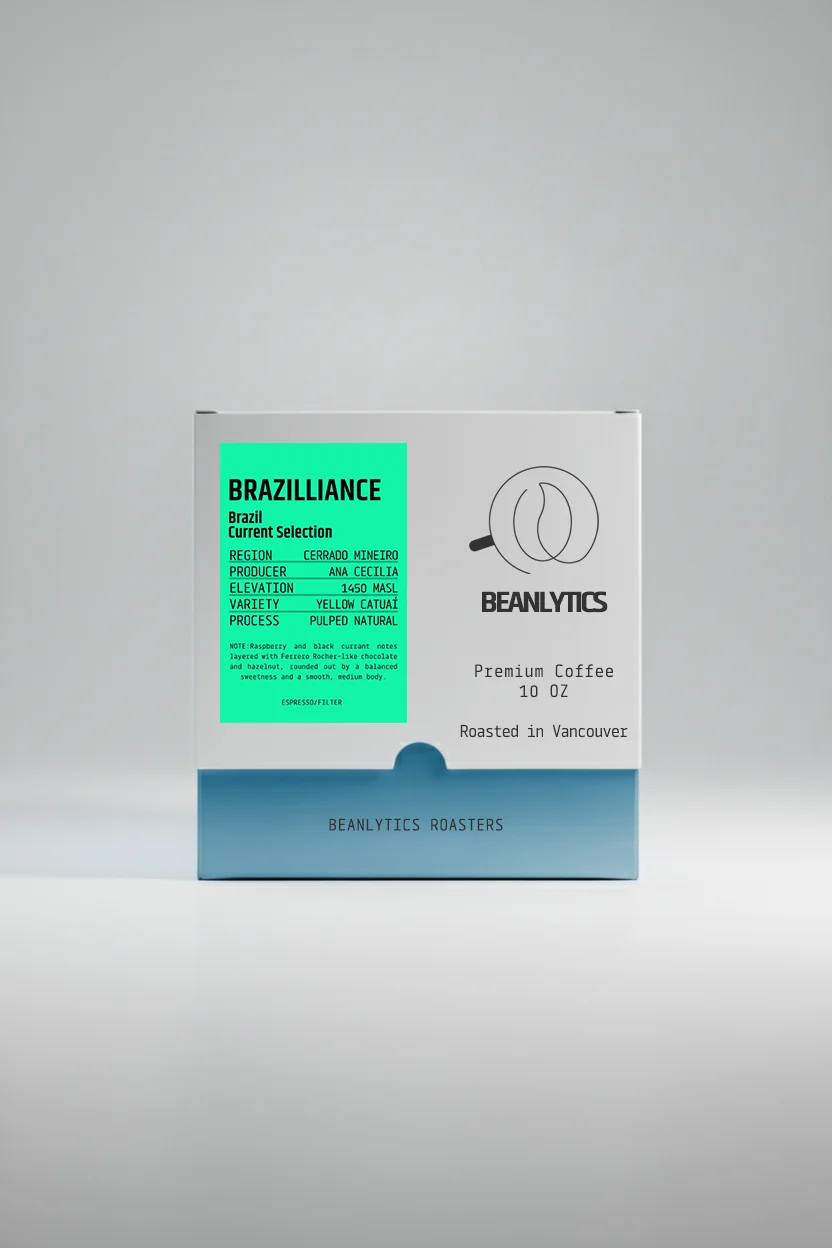
| Brazil Yellow Catuai | Fazenda São Luiz, Ana Cecilia Gondim Velloso and her brother Lucio | Cerrado Mineiro, 1,450 masl | A family farm that has grown coffee for over a century, now in its current generation’s hands; pulped natural process. |
| Sumatra Mandheling | Simalungun and Karo community cooperative | North Sumatra, 1,200 to 1,300 masl | A cooperative lot, wet-hulled in the regional tradition; the Ateng variety. |
| Colombia Huila decaf | Elias Roa Parra | Acevedo, Huila, 1,650 masl | Decaffeinated with ethyl acetate derived from sugarcane, a process that keeps the lot’s origin identity; washed. |
| Colombia El Diviso Sidra | El Diviso, Nestor Lasso | Pitalito, Huila, 1,850 masl | Named farm and producer; processed in stages, anaerobic then washed; variety, altitude and process on the bag. |
| Guatemala Antigua Pacas | Pulcal Farm, Maria Zelaya Aguirre | Antigua, 1,750 masl | Named farm and family; washed; variety and altitude on the bag. |
| El Salvador Pacamara | Finca Luna, Samuel Luna | Citalá, Chalatenango, 1,450 masl | Named farm and producer; washed; the Pacamara variety El Salvador bred. |
Past lots stay on record too: a certified organic lot from the AAPICUC cooperative in Unión Cantinil, Huehuetenango; a Swiss Water decaf from Comayagua and El Paraíso in Honduras; a natural from smallholders in Ethiopia’s Guji zone; and a Red Catuai from Fazenda Recreio in Vale da Grama, dried on patios and raised beds and traceable from tree to export. Each one is still on its origin page beside the lot that replaced it.
What sustainable sourcing changes in the cup
It is not only ethics. Shade-grown coffee ripens slowly, and slow ripening builds the sugars that show up as sweetness on the cupping table; the Limmu lot is a clear example. Careful processing, the staged fermentation at El Diviso or the selective picking at Finca Miramar, is what separates a clean, distinct cup from a generic one. A farm that can afford to reinvest picks riper and dries more carefully, and both are things you taste. Sustainable sourcing, done honestly, is a quality decision before it is a marketing one.
What we publish, and what we do not
Every product page carries the farm, region, altitude, variety and process from the lot’s own paperwork. When a lot arrives without one of those, the field stays blank; we do not fill it in to make the page look complete. We do not yet publish the prices we pay for green coffee, and we do not claim certifications a lot does not carry: of the coffees above, only the past Guatemala lot was certified organic. Everything else rests on the named farm, not on a label.
Certifications: what the labels mean and what they leave out
Fairtrade certifies a floor price and a community premium paid to a cooperative. Organic certifies that the farm grows without synthetic inputs, audited by an accredited body. Rainforest Alliance certifies a standard for farm environmental and social practice. All three are proof of a process. None of them tells you which farm the coffee came from, and a certified lot can still be blended across dozens of farms. Traceability is proof of a place. The two are complementary, and when you can only have one, a named farm with paperwork tells you more about the cup than a seal on the bag.
Questions people ask
How can coffee be sustainable?
Coffee is sustainable when the farm stays productive and the farmer stays in coffee: shade and soil are protected, water from processing is managed, the lot is traceable to the people who grew it, and the price covers the cost of growing it well with something left to reinvest. Each of those can be checked, which is how you tell sustainability from a slogan.
Is direct trade better than Fairtrade?
They measure different things. Fairtrade is an audited price floor and premium for cooperatives. Direct trade is a description a roaster gives its own buying, with no audit behind it. The useful question for either is the same: can the roaster name the farm, the producer and the harvest?
What is the most sustainable way to make coffee?
Buy what you will drink in the next few weeks, roasted to order, so nothing goes stale; brew by hand or with a machine that takes ground coffee rather than capsules; and compost the grounds. The largest impact is upstream of your kitchen, though, in how the coffee was grown and bought, which is why the farm on the bag matters more than the brewer on the counter.
How you can make a difference
- Buy coffee that names the farm, station or cooperative, and treat “sourced from Colombia” as a sign the roaster does not know or will not say.
- Ask who imported it. A roaster who can answer has read the paperwork.
- Look for specialty coffee roasters in Vancouver that publish origin data rather than adjectives.
- Read one farm’s story properly. Ours for Volcán Azul in Costa Rica shows what a documented relationship looks like.
- Buy in season. When a harvest sells out, the next lot is a new farm and a new page, not a refill.
See how we source, origin by origin.