Origins & Sourcing
El Salvador Coffee Guide: Origin, Flavor & Sourcing
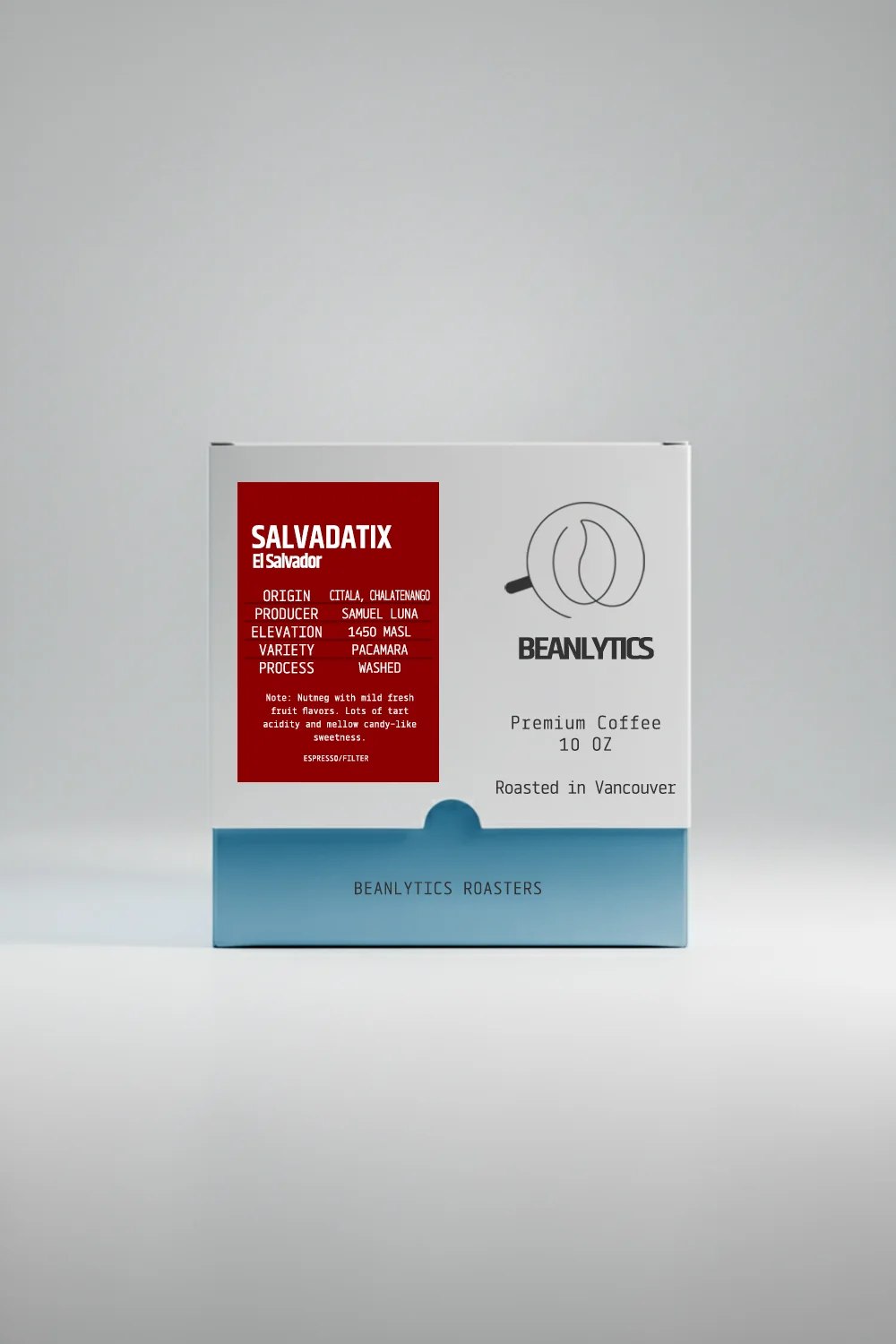
Salvadoran coffee is known for balance and sweetness: caramel and brown sugar, red apple and stone fruit, milk chocolate and a gentle citrus lift, on a soft, syrupy body. A large share of the country’s farms still grow Bourbon and Pacas, and El Salvador bred Pacamara, a large-bean cross of Pacas and Maragogipe that tastes floral, herbal and more intense. Our lot is a washed Pacamara from Finca Luna in Citalá, Chalatenango.
A Coffee History Written in Bourbon
El Salvador is the smallest country in Central America, and for most of the last century its coffee was treated accordingly: a quiet contributor to blends, overshadowed by bigger neighbors.
Coffee shaped El Salvador’s modern history. Through much of the twentieth century it dominated the country’s exports and economy, and two parts of that legacy still matter in your cup.
First, the varieties never got replaced. Other countries ripped out old, low-yielding trees in favor of modern high-production hybrids.
A large share of El Salvador’s farms still grow Bourbon, an heirloom variety prized for sweetness and balance, alongside Pacas, a natural Bourbon mutation discovered on a Salvadoran farm. Older genetics, better cups.
Second, adversity pushed quality. When coffee prices collapsed and leaf rust hit the region, competing on volume stopped being viable for small Salvadoran farms.
The producers who survived did it by going up-market: better picking, careful processing, and direct relationships with specialty buyers. For its size, the country now sits well above its weight at the quality end of the market.
Where Salvadoran Coffee Grows
El Salvador is a volcanic country, and its coffee grows along its mountain ranges.
Apaneca-Ilamatepec
The western range, and the country’s best-known coffee zone. A large share of its competition lots come from here.
Alotepec-Metapán and Chalatenango
The northern highlands near the Honduran border. This is the highest and most rugged growing area, and it has become known for micro-lots. It is also where our lot comes from: Citalá, in Chalatenango.
El Bálsamo-Quezaltepec and the central ranges
The slopes around San Salvador, where historic estates on volcanic soil produce classic, balanced profiles.
| Range | Known for | Our lot |
|---|---|---|
| Apaneca-Ilamatepec | The western range and the country’s best-known zone; a large share of its competition lots | — |
| Alotepec-Metapán and Chalatenango | The northern highlands; the highest and most rugged growing area, known for micro-lots | Yes, Citalá in Chalatenango |
| El Bálsamo-Quezaltepec and the central ranges | Historic estates on volcanic soil around San Salvador; classic, balanced profiles | — |
Pacamara: The Variety El Salvador Gave the World
Pacamara is a cross of Pacas and Maragogipe, developed by El Salvador’s national coffee research program in the twentieth century. It inherited size from Maragogipe, so the beans are enormous, and structure from Pacas.
Somewhere in the cross it picked up a personality entirely its own.
A good Pacamara doesn’t taste like anything else:
- Big, unusual aromatics: herbal and floral notes that show up in few other varieties
- Savory-sweet complexity, with tasters describing everything from nutmeg and warm spice to chocolate, stone fruit, and citrus pith
- A creamy, weighty body with a long finish
It is a polarizing variety and a competition favorite. Judges either fall in love or argue about it, which is exactly what makes it worth tasting yourself.
Want to try one? Our El Salvador Pacamara is a washed Pacamara from Finca Luna in Chalatenango. Look for the nutmeg.
What Does Salvadoran Coffee Taste Like? (Flavor Profile)
The Salvadoran flavor signature is balance and sweetness rather than dramatic intensity, a legacy of the country’s Bourbon-dominant heritage.
Expect caramel and brown sugar, red apple and stone fruit, milk chocolate, and a gentle citrus lift, carried on a soft, syrupy body and rounded acidity.
It is a cup that rarely polarizes: approachable enough for a first specialty coffee, complex enough to reward close attention.
Altitude and processing shift the profile. Higher, cooler farms in Chalatenango and Apaneca-Ilamatepec give more clarity and brighter fruit, while lower plots lean softer and sweeter.
Washed lots taste cleaner and more citrus-toned, naturals sweeter and fruitier, so two Salvadoran coffees can taste quite different while sharing that signature sweetness.
Two profiles dominate, depending on the variety:
- The everyday Bourbon profile, from the Bourbon and Pacas lots that make up most of the country’s coffee. Soft, sweet, and comforting, with caramel, milk chocolate, and red apple. The classic, approachable Salvadoran cup.
- The showpiece Pacamara profile, bigger and more complex, with floral and herbal notes, tropical and citrus fruit, and a heavier body. It is the variety that wins competitions, and it tastes noticeably more intense and layered than a straightforward Bourbon.
Processing adds a second axis. Washed lots, like ours, are the cleanest expression of these varieties, while El Salvador’s honey and natural lots layer fruit and syrupy sweetness on top.
That range is a deliberate strength of the country’s quality-focused farms.
El Salvador vs Guatemala and Colombia
Put El Salvador beside its neighbours and it is the softest of the three. Guatemala shares the washed tradition, but the sweetness runs darker: our Antigua Pacas from Pulcal Farm (Maria Zelaya Aguirre, 1,750 masl, washed) reads as plum, white chocolate and brown sugar with pecan and a lime edge, where our Pacamara from Finca Luna (Samuel Luna, Citalá, Chalatenango, 1,450 masl, washed) leads with nutmeg and mild fresh fruit. Pacas is one of Pacamara’s two parents, so what you taste between those two cups is mostly altitude, soil and bean size, not genetics. Colombia brings more lift and more experimental processing. Our Huila lots grow 200 to 400 metres higher, and the El Diviso Sidra (anaerobic washed, 1,850 masl) cups as honeysuckle, butter cookie and lime, a long way from Salvadoran caramel. Pick El Salvador for sweetness and balance, Guatemala for chocolate depth, Colombia for brightness.
How We Source Our Salvadoran Coffee
Our lot, Our El Salvador Pacamara, is a washed Pacamara grown by Samuel Luna at Finca Luna in Citalá, Chalatenango, at 1,450 meters above sea level.
- Producer: Samuel Luna, Finca Luna
- Region: Citalá, Chalatenango, El Salvador
- Elevation: 1,450 masl
- Variety: Pacamara
- Process: Washed
- Roasted: to order in Richmond, BC, and dispatched within 1 to 2 business days of roasting
Full farm-level traceability, like everything we roast. Here is how we choose our sourcing partners.
Our buying here follows the same principles as everywhere we work. Read about our approach to sustainable coffee sourcing.
How to Brew a Pacamara
Pacamara rewards methods that give its aromatics room:
- Pour-over. The spice and florals articulate best in a clean cup.
- French press. Leans into the creamy body, if you prefer weight over clarity.
- Taste it as it cools. Pacamara is known for evolving in the cup, and the last sip rarely tastes like the first.
Start at a 1:16 coffee-to-water ratio and adjust from there. Our ratio guide covers the details.
Common Questions
Is Salvadoran coffee good?
At the specialty level, consistently. The combination of heirloom Bourbon genetics, volcanic soil, and quality-first farms makes it one of Central America’s most reliable origins for sweetness and balance.
What’s special about Pacamara?
It is one of the few well-known varieties actually bred in the country that grows it, with giant beans and a flavor profile nothing else replicates.
Washed, honey, or natural: which Salvadoran coffee should I pick?
Washed for clarity and elegance, which is what ours is. Honey or natural for bigger fruit and syrupy sweetness. Neither is “better”; it is a style choice.
When is Salvadoran coffee freshest?
Harvests in Central America generally run through the cooler months, but the roast date matters far more than the harvest month for what you taste. We roast to order, so every bag ships days after roasting. How long coffee beans stay fresh covers the weeks after the bag arrives.
The Bottom Line
El Salvador earned its place at the specialty table the hard way: old varieties kept alive, small farms that chose quality over volume, and a homegrown variety, Pacamara, that the whole coffee world now competes to buy.
If you have never tasted one, a washed Pacamara from the northern highlands is one of coffee’s genuinely distinctive experiences.
Curious how it compares to other origins? Start with our Ecuadorian coffee guide, a very different cup from just across the continent.
Try it fresh: our El Salvador Pacamara, roasted to order, or add it to your subscription rotation.
The Pacamara and Bourbon lots described here, and anything else from the country, are on our El Salvador coffee page.
A Pacamara is worth trying beside something ordinary to hear what the variety actually does, and that comparison is easier month to month than in one order. The Beansync subscription rotates a single-origin lot through, roasted to order and shipped free.